2026 Investment Strategies: How to Secure a 7% Return in a Volatile Market
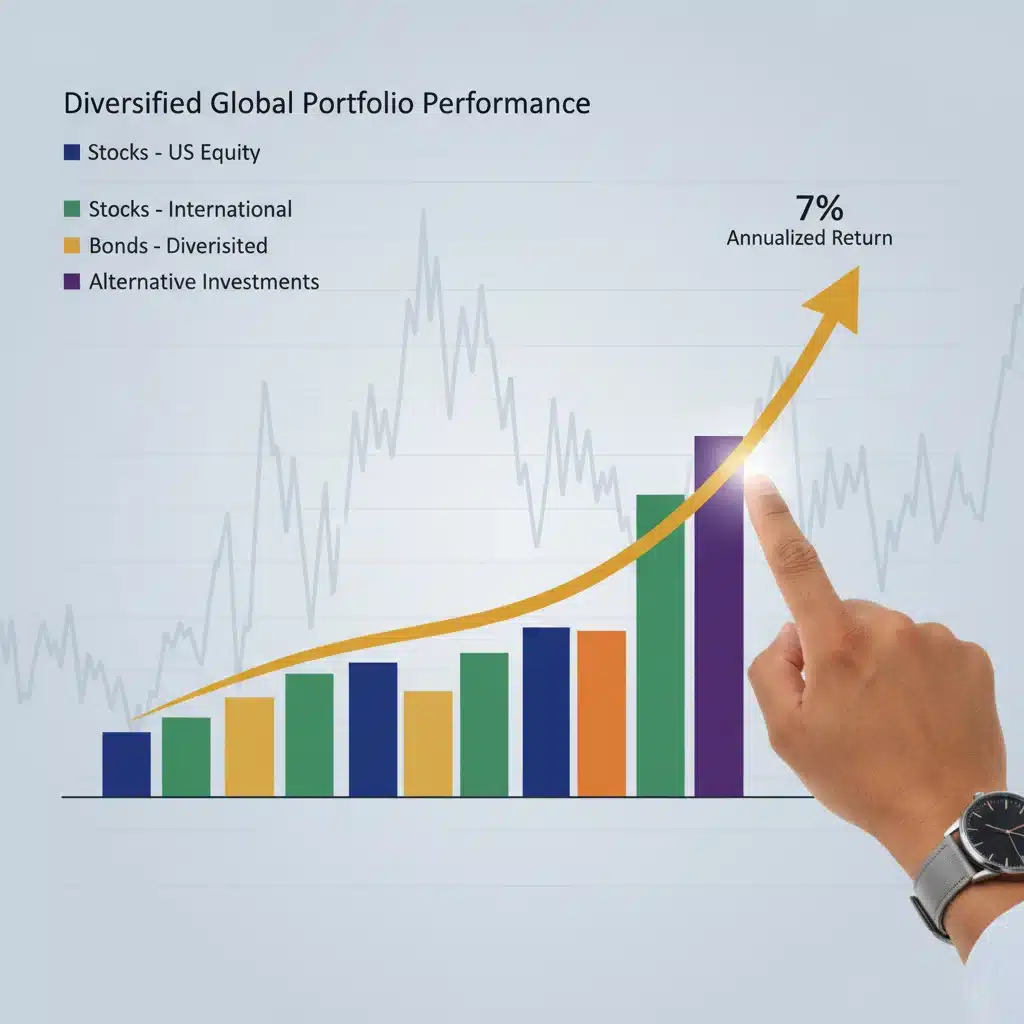
In the ever-evolving landscape of global finance, investors are constantly seeking robust strategies to not only preserve capital but also to generate meaningful returns. As we look towards 2026, the prospect of securing a consistent 7% return in a market characterized by increasing volatility presents both challenges and unparalleled opportunities. This comprehensive guide delves into the intricacies of crafting an investment portfolio designed to thrive in such an environment, focusing on actionable insights and diversified approaches to help you achieve your financial objectives.
The global economic outlook for 2026 suggests a continuation of dynamic shifts. Geopolitical tensions, technological disruptions, inflationary pressures, and central bank policies will likely remain dominant themes, contributing to market fluctuations. However, within this volatility lies the potential for significant gains for those who are well-informed and strategically positioned. Our aim is to demystify these complexities and provide a clear roadmap to help you secure 7% return, transforming potential headwinds into tailwinds for your investment journey.
Understanding the 2026 Economic Climate: A Prerequisite for Success
Before diving into specific investment vehicles, it’s crucial to grasp the overarching economic narrative expected in 2026. Experts predict a period of moderate global growth, albeit with regional disparities. Inflation, while potentially moderating from recent peaks, is unlikely to fully revert to pre-pandemic levels, suggesting a continued focus on inflation-hedging assets. Interest rates, influenced by central bank efforts to balance economic growth with price stability, will also play a pivotal role in shaping asset valuations.
Technological advancements, particularly in artificial intelligence, biotechnology, and renewable energy, are set to be major drivers of economic transformation and investment opportunities. These sectors are not only poised for significant growth but also offer a degree of resilience against broader economic downturns due to their innovative nature and increasing demand. Understanding these macroeconomic forces is the first step towards building a portfolio that can successfully secure 7% return.
Diversification: The Cornerstone of Securing a 7% Return
In a volatile market, the old adage ‘don’t put all your eggs in one basket’ holds more truth than ever. Diversification is not merely about spreading risk; it’s about optimizing returns by combining assets that react differently to various market conditions. To secure 7% return, a multi-asset approach is essential. This includes a strategic mix of equities, fixed income, real estate, commodities, and alternative investments.
Equity Investments: Navigating Growth and Value
Equities will remain a primary driver of returns. Within equities, a balanced approach combining growth stocks and value stocks can mitigate risk while capturing upside potential. Growth stocks, often found in technology and innovation sectors, offer high appreciation potential but can be more volatile. Value stocks, typically from established industries, may offer stability and dividend income, performing well during economic recoveries or periods of market uncertainty. For 2026, consider sectors benefiting from long-term trends such as digitalization, sustainable energy, and healthcare innovation. Focusing on companies with strong balance sheets, consistent earnings, and competitive advantages will be key to help secure 7% return.
Fixed Income: Balancing Risk and Income
While interest rates have seen increases, fixed income still plays a vital role in portfolio stability and income generation. Government bonds, corporate bonds, and municipal bonds offer varying degrees of risk and return. In a volatile environment, higher-quality bonds can act as a buffer against equity downturns. Exploring short-duration bonds can reduce interest rate risk, while selectively investing in emerging market bonds with strong credit profiles can offer attractive yields to help secure 7% return. The key is to balance yield potential with credit quality.
Real Estate: Tangible Assets for Stability
Real estate, both direct investments and Real Estate Investment Trusts (REITs), can provide diversification benefits and inflation hedging. Commercial real estate, particularly in logistics, data centers, and specialized healthcare facilities, continues to show resilience. Residential real estate in growing urban centers also presents opportunities. REITs offer liquidity and diversification within the real estate sector, allowing investors to gain exposure without direct property ownership. Carefully assessing market conditions and property fundamentals is crucial for successful real estate allocation to aid in achieving a 7% return.
Commodities: Hedging Against Inflation and Geopolitical Risks
Commodities like gold, silver, and industrial metals can serve as hedges against inflation and geopolitical instability. Energy commodities, influenced by global supply and demand dynamics, also offer cyclical opportunities. While volatile, a small allocation to commodities can provide diversification and act as a safeguard during periods of economic uncertainty. Understanding the supply-demand fundamentals and geopolitical factors influencing commodity prices is essential for strategic allocation to secure 7% return.
Emerging Markets: Unlocking Growth Potential
Emerging markets (EMs) are projected to contribute significantly to global growth in 2026. While they carry higher risks due to political instability, currency fluctuations, and less developed regulatory frameworks, they also offer higher growth potential. Countries in Southeast Asia, parts of Latin America, and select African nations are experiencing rapid economic development, growing middle classes, and increasing technological adoption. Investing in EMs requires thorough due diligence and a long-term perspective.
Consider a diversified approach to EMs, focusing on broad-based EM ETFs or actively managed funds that invest in companies with strong fundamentals and exposure to domestic growth themes. Specific sectors like consumer discretionary, technology, and renewable energy in these regions could offer substantial returns. A prudent allocation to emerging markets can significantly enhance your ability to secure 7% return, providing a growth engine for your portfolio.

Alternative Investments: Beyond Traditional Assets
To truly secure 7% return in a volatile market, looking beyond traditional stocks and bonds is often beneficial. Alternative investments, such as private equity, hedge funds, venture capital, and even digital assets, can offer uncorrelated returns and enhanced diversification. However, these investments often come with higher minimums, less liquidity, and greater complexity, making them suitable for sophisticated investors or through specialized funds.
Private Equity and Venture Capital
Private equity (PE) and venture capital (VC) invest in private companies, offering exposure to high-growth potential businesses before they go public. These investments typically have longer lock-up periods but can generate superior returns if successful. Accessing PE and VC usually involves investing through funds or specialized platforms. For those looking to secure 7% return, a calculated allocation to these areas can be transformative.
Hedge Funds
Hedge funds employ various strategies to generate returns, often aiming for absolute returns regardless of market direction. They can utilize short selling, leverage, and derivatives, offering potential downside protection during volatile periods. However, their fee structures are typically higher, and performance can vary widely. Careful selection of hedge funds based on strategy, track record, and transparency is paramount.
Digital Assets: A Frontier of Opportunity
The landscape of digital assets, including cryptocurrencies and non-fungible tokens (NFTs), continues to evolve rapidly. While highly volatile, a small, speculative allocation to established digital assets or blockchain-related companies could offer significant upside. Understanding the underlying technology and regulatory environment is crucial before venturing into this nascent but potentially lucrative space. This area, while risky, could contribute to achieving a 7% return if managed carefully.
Risk Management and Portfolio Rebalancing
Achieving a 7% return in a volatile market is not just about selecting the right assets; it’s also about diligent risk management and consistent portfolio rebalancing. Market conditions are dynamic, and what works today might not work tomorrow. Regular review and adjustment of your portfolio are essential.
Setting Clear Investment Goals and Risk Tolerance
Before any investment, define your financial goals, time horizon, and risk tolerance. Are you saving for retirement, a down payment, or wealth accumulation? Your answers will dictate the appropriate asset allocation. A higher risk tolerance might allow for a larger allocation to growth-oriented assets, while a lower tolerance would favor more conservative investments.
Systematic Rebalancing
Over time, market movements will cause your asset allocation to drift from your target. Rebalancing involves selling assets that have performed well and reallocating to those that have underperformed, bringing your portfolio back to its desired mix. This disciplined approach helps lock in gains and buy low, ensuring your portfolio remains aligned with your risk profile and objectives. Regular rebalancing is critical to help secure 7% return consistently.
Monitoring and Adapting to Market Signals
Stay informed about global economic developments, central bank policies, and geopolitical events. While avoiding knee-jerk reactions, be prepared to adapt your strategy if fundamental market conditions change significantly. This doesn’t mean constant trading, but rather a thoughtful reassessment of your portfolio’s resilience and potential to secure 7% return under new circumstances.
Strategic Approaches for 2026: Beyond Asset Allocation
Beyond traditional asset allocation, several strategic approaches can enhance your ability to secure 7% return in 2026’s volatile landscape.
Thematic Investing: Riding Megatrends
Thematic investing involves identifying and investing in long-term global trends or ‘megatrends’ that are expected to shape the future. Examples for 2026 include:
- Artificial Intelligence and Automation: Companies at the forefront of AI development, robotics, and automation are poised for exponential growth.
- Renewable Energy and Sustainability: The global transition to clean energy and sustainable practices offers significant investment opportunities in solar, wind, electric vehicles, and green technologies.
- Digital Health and Biotechnology: Advances in personalized medicine, gene editing, and telemedicine are transforming healthcare.
- Cybersecurity: As digitalization increases, so does the demand for robust cybersecurity solutions.
Investing in these themes through ETFs or a basket of individual stocks can provide focused exposure to high-growth areas, helping to secure 7% return.

Dividend Growth Investing: A Source of Stable Income
Companies that consistently increase their dividends often exhibit strong financial health and disciplined management. Dividend growth investing can provide a steady stream of income, which can be reinvested to compound returns, and also offers a degree of downside protection during market downturns. Focus on companies with a long history of dividend increases and a sustainable payout ratio. This strategy can be a reliable component in your quest to secure 7% return.
Dollar-Cost Averaging: Mitigating Market Timing Risk
In a volatile market, trying to time market entry and exit points is notoriously difficult. Dollar-cost averaging (DCA) involves investing a fixed amount of money at regular intervals, regardless of market fluctuations. This strategy helps reduce the average cost per share over time, as more shares are bought when prices are low and fewer when prices are high. DCA is a disciplined approach that removes emotion from investing and can be highly effective in achieving long-term goals and helping to secure 7% return.
The Role of Professional Guidance
Navigating the complexities of 2026’s volatile markets to secure 7% return can be challenging. For many investors, seeking advice from a qualified financial advisor is invaluable. A professional can help assess your individual financial situation, define your goals, create a personalized investment plan, and assist with ongoing portfolio management and rebalancing. They can provide insights into emerging opportunities and risks, ensuring your strategy remains robust and aligned with your objectives.
Financial advisors can also help you understand complex investment products and tax implications, optimizing your returns and minimizing liabilities. Their expertise can be particularly beneficial in constructing a truly diversified portfolio that incorporates traditional and alternative assets effectively, ultimately enhancing your chances to secure 7% return.
Conclusion: A Proactive Approach to 2026 Investments
Securing a 7% return in the volatile markets of 2026 is an ambitious yet achievable goal. It requires a proactive, informed, and disciplined approach. By embracing diversification across various asset classes, strategically allocating to emerging markets and alternative investments, and diligently managing risk through rebalancing and continuous monitoring, investors can build resilient portfolios. Focusing on thematic investing, dividend growth, and employing dollar-cost averaging further strengthens your investment framework.
The key is to remain adaptable, informed, and patient. While market volatility can be unsettling, it also creates opportunities for astute investors. By understanding the economic climate, leveraging diverse strategies, and considering professional guidance, you can confidently navigate the investment landscape of 2026 and work towards securing your desired 7% return, paving the way for long-term financial success. Your journey to secure 7% return begins with thoughtful planning and consistent execution.
Author