New Federal Crypto Reporting Rules 2026: What US Investors Must Know

The world of cryptocurrency has always operated on the fringes of traditional finance, offering a promise of decentralization and a new paradigm for asset ownership. However, as digital assets have grown in popularity and value, governments worldwide have increasingly sought to bring them under regulatory umbrellas, primarily for tax purposes. In the United States, a seismic shift is on the horizon, one that will fundamentally alter how investors interact with their digital holdings and report them to the Internal Revenue Service (IRS). New federal crypto reporting rules are set to take effect in January 2026, and for US investors, understanding these changes isn’t just important—it’s absolutely critical for avoiding penalties and ensuring compliance.
Breaking: New Federal Cryptocurrency Reporting Mandates Effective January 2026 – What US Investors Need to Know Now
The digital asset landscape is evolving rapidly, and with it, the regulatory framework governing it. For years, the IRS has struggled to accurately track and tax cryptocurrency transactions, leading to a significant ‘tax gap’ in this burgeoning sector. The new federal crypto reporting rules, stemming from provisions in the Infrastructure Investment and Jobs Act (IIJA) of 2021, aim to close this gap by imposing strict reporting requirements on brokers and, by extension, on investors. While the January 2026 effective date might seem distant, the preparations required are extensive, and proactive understanding is key to a smooth transition.
The Genesis of the New Crypto Reporting Rules
To fully grasp the implications of these forthcoming changes, it’s essential to understand their origin. The Infrastructure Investment and Jobs Act (IIJA), signed into law in November 2021, included several provisions specifically targeting digital assets. Among these, Section 6045 of the Internal Revenue Code was amended to expand the definition of a ‘broker’ to include anyone (or any entity) responsible for regularly providing any service effectuating transfers of digital assets. This broad definition is crucial because it encompasses not only traditional crypto exchanges but potentially also decentralized finance (DeFi) protocols, crypto payment processors, and even certain wallet providers, though the final regulations will clarify the exact scope.
The core of these amendments is the requirement for these ‘brokers’ to report detailed information about their customers’ digital asset transactions to the IRS, similar to how traditional financial institutions report stock and bond trades. This reporting will include gross proceeds from sales, acquisitions, and other dispositions of digital assets, as well as the cost basis for those transactions. The goal is to provide the IRS with a clearer picture of investors’ gains and losses, making it easier to enforce tax compliance and reduce the potential for tax evasion.
Why January 2026? A Phased Approach to Implementation
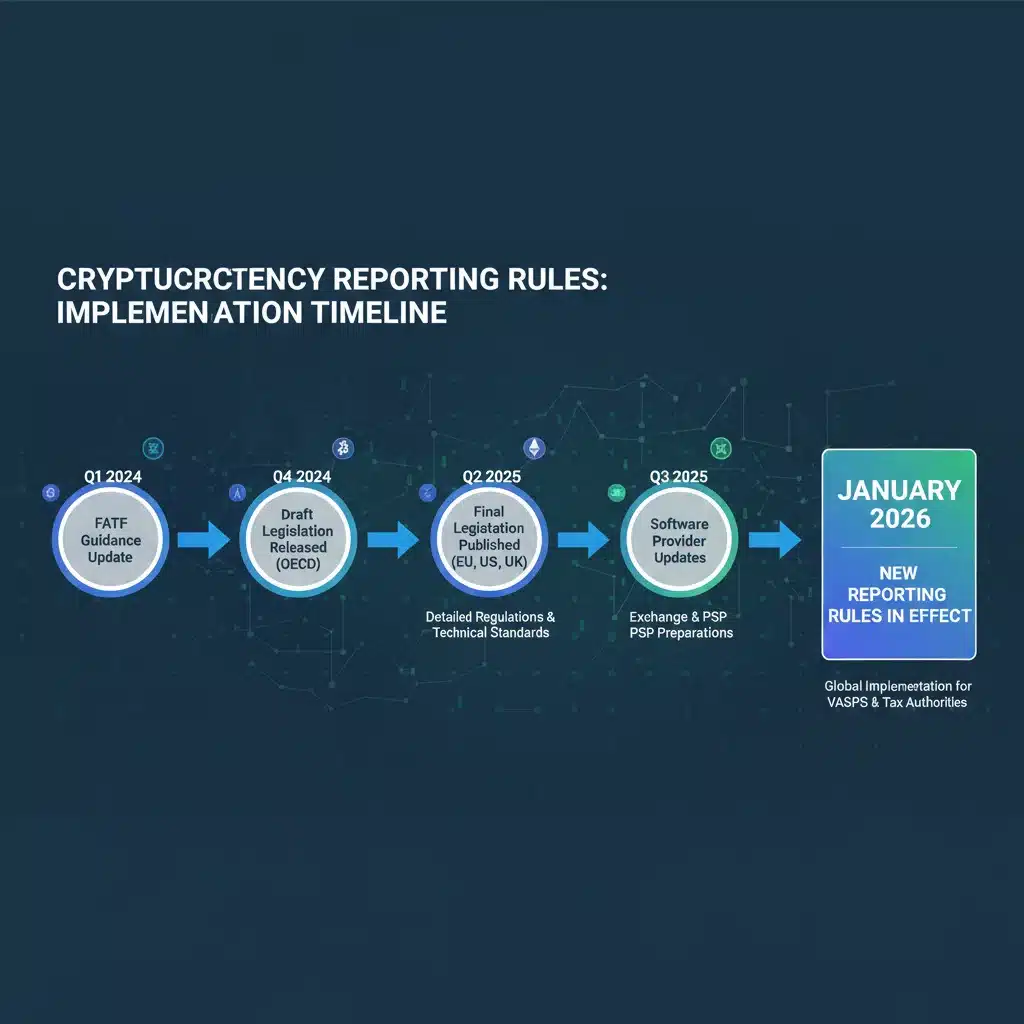
The delayed effective date of January 2026 for these crypto reporting rules is not arbitrary. It provides the Treasury Department and the IRS with ample time to develop and finalize comprehensive regulations that will define the specific parameters of these reporting requirements. It also gives the crypto industry and investors time to adapt their systems and practices to comply. This phased approach acknowledges the complexity of digital assets and the unique challenges they present compared to traditional financial instruments.
However, the delay doesn’t mean investors can afford to be complacent. The regulatory process involves public comments and multiple drafts, but the fundamental direction is clear: increased transparency and reporting. Investors who wait until late 2025 to understand these changes will find themselves scrambling to gather necessary information and adjust their strategies. Proactive engagement with the evolving regulatory landscape is paramount.
Who is Affected by the New Crypto Reporting Rules?
In short, virtually every US investor involved in digital assets will be affected. This isn’t just about high-volume traders or institutional investors; even casual participants in the crypto market will need to be aware of and comply with these new regulations. Here’s a breakdown of who specifically needs to pay attention:
- Individual Investors: Anyone who buys, sells, exchanges, or otherwise disposes of cryptocurrency will be subject to these rules. This includes transactions on centralized exchanges, peer-to-peer trades, and potentially even certain DeFi activities.
- Crypto Exchanges and Platforms: These entities are the primary targets of the ‘broker’ definition and will be responsible for collecting and reporting detailed transaction data to the IRS. They will need to implement robust systems to track cost basis, sales proceeds, and other relevant information.
- Decentralized Finance (DeFi) Participants: The application of the ‘broker’ definition to DeFi remains a significant area of uncertainty. The IRS and Treasury are grappling with how to apply traditional financial regulations to a decentralized ecosystem. Depending on the final regulations, certain DeFi protocols or interfaces might fall under the reporting requirements.
- Mining and Staking Operations: While the primary focus of these rules is on dispositions, the income generated from mining and staking activities is already taxable. The new reporting mechanisms might make it easier for the IRS to track these income streams.
- Businesses Accepting Crypto: Companies that accept cryptocurrency as payment will also need to ensure their accounting and reporting procedures align with the new mandates, especially if they function as facilitators of crypto transactions.
The breadth of these new crypto reporting rules underscores the government’s intent to treat digital assets more like traditional securities for tax purposes. This means that the days of opaque or hard-to-track crypto transactions are rapidly coming to an end.
Key Provisions of the New Crypto Reporting Rules
While the final regulations are still being drafted, the core components of the new reporting mandates are clear. Investors should familiarize themselves with these key provisions:
1. Expanded Definition of ‘Broker’
As mentioned, the definition of a ‘broker’ is being significantly expanded. This is perhaps the most impactful change. It means that many entities that previously had no tax reporting obligations regarding digital assets will now be required to do so. This includes any service that facilitates the transfer of digital assets. The Treasury Department has clarified that this definition is intended to be broad but will likely exclude certain entities like decentralized autonomous organizations (DAOs) or purely software-based wallet providers that do not have control over user assets or the ability to collect identifying information.
2. Form 1099-B for Digital Assets
Under the new crypto reporting rules, brokers will be required to issue Form 1099-B to investors, similar to how traditional stockbrokers report capital gains and losses. This form will detail the gross proceeds from sales, exchanges, and other dispositions of digital assets, as well as the cost basis (the original purchase price) and the date of acquisition. This is a monumental change, as currently, investors are largely responsible for tracking this information themselves, a task that can be incredibly complex for active traders.
3. Cost Basis Reporting
The requirement for brokers to report cost basis is a game-changer. For years, investors have had to manually calculate the cost basis of their crypto assets, often using complex accounting methods like First-In, First-Out (FIFO), Last-In, First-Out (LIFO), or specific identification. With brokers now mandated to report this, the IRS will have direct access to this crucial information, making it much harder for investors to misreport or omit capital gains and losses.
4. Information Reporting for Transfers
Beyond sales and exchanges, the new rules may also require reporting on certain transfers of digital assets, particularly those to and from non-custodial wallets or other platforms. The exact scope of this reporting is still being defined, but the intent is to prevent investors from moving assets off-platform to avoid reporting requirements.
5. Foreign Digital Asset Accounts
While not directly part of the IIJA provisions, it’s important to remember that US citizens and residents already have obligations to report foreign financial accounts, including those holding digital assets, under the Foreign Account Tax Compliance Act (FATCA) and Report of Foreign Bank and Financial Accounts (FBAR) rules. The increased domestic reporting will likely be complemented by a more aggressive stance on identifying unreported foreign digital asset holdings.
Preparing for the New Crypto Reporting Rules: A Roadmap for Investors
Given the significant implications, US investors should begin preparing for these changes now, well in advance of the January 2026 deadline. Here’s a roadmap to ensure compliance and minimize future headaches:
1. Start Tracking Everything – Retroactively if Necessary
Even though brokers will be required to report cost basis from 2026 onwards, you are still responsible for accurate reporting for all prior years. If you haven’t been meticulously tracking your crypto transactions, now is the time to start. Gather all transaction data, including:
- Date and time of every purchase, sale, exchange, or disposition.
- The type of digital asset and the quantity involved.
- The fair market value (FMV) of the asset at the time of the transaction, denominated in USD.
- The cost basis of the assets acquired.
- Any transaction fees incurred.
- Records of income from mining, staking, airdrops, forks, or other sources.
Many crypto tax software solutions can help aggregate this data from various exchanges and wallets, often retroactively. Investing in such a tool now can save immense time and stress later.
2. Understand Your Tax Obligations for Prior Years
The new crypto reporting rules apply from 2026, but your tax obligations for previous years remain. If you have unreported crypto gains or income, consider consulting a tax professional specializing in digital assets. The IRS has been increasingly focused on crypto tax enforcement, and voluntary disclosure programs or amended returns might be options to get compliant before more stringent reporting makes discrepancies easier to spot.
3. Familiarize Yourself with Different Cost Basis Methods
While brokers will report cost basis, understanding how it’s calculated is crucial. The IRS generally allows methods such as FIFO (First-In, First-Out), LIFO (Last-In, First-Out), and Specific Identification. Each method can yield different tax outcomes depending on market fluctuations. For instance, if you want to minimize capital gains, specific identification, which allows you to choose which specific units of crypto to sell, can be advantageous. However, this requires meticulous record-keeping.
4. Consolidate Your Digital Asset Holdings (Where Possible)
Managing assets across dozens of exchanges and wallets will become even more cumbersome with the new reporting requirements. Consider consolidating your holdings to a fewer number of reputable platforms or self-custody solutions where you can easily export transaction histories. This simplification can significantly ease the burden of data collection and reconciliation.
5. Stay Informed About Final Regulations
The proposed regulations issued by the Treasury and IRS in August 2023 provide a strong indication of the final rules, but they are not the definitive word. There will be a period for public comments, and the final regulations could include minor adjustments. Keep an eye on official IRS announcements and reputable crypto news sources for updates. Subscribing to newsletters from tax professionals specializing in digital assets can also be beneficial.
6. Seek Professional Advice
The complexity of these new crypto reporting rules cannot be overstated. If you have substantial holdings or engage in complex transactions (e.g., DeFi lending, yield farming, NFTs, margin trading), consulting with a tax attorney or certified public accountant (CPA) specializing in digital assets is highly recommended. They can help you navigate the nuances, ensure compliance, and potentially identify tax-efficient strategies.

Potential Challenges and Unanswered Questions
While the intent behind the new crypto reporting rules is clear, their implementation is fraught with challenges, particularly given the decentralized and often pseudonymous nature of digital assets. Several key questions and potential issues remain:
- DeFi Protocol Compliance: How will truly decentralized protocols, without a central entity to collect user information, comply with ‘broker’ reporting requirements? The proposed regulations offer some exemptions for certain decentralized applications, but the line can be blurry.
- Non-Custodial Wallets: If an investor moves assets from an exchange to a self-custodied wallet, will the exchange be required to report this transfer? And how will the IRS track the disposition of assets from a non-custodial wallet if no ‘broker’ is involved?
- Foreign Exchanges: US investors using foreign crypto exchanges that do not comply with US reporting requirements will still be personally responsible for reporting their transactions. However, the IRS might become more adept at identifying such accounts through data analytics and international cooperation.
- Privacy Concerns: The increased data collection and reporting raise privacy concerns for some crypto enthusiasts who value the anonymity offered by digital assets. Balancing regulatory needs with user privacy will be an ongoing challenge.
- Technological Implementation: Both the IRS and crypto exchanges face significant technological hurdles in building the systems necessary to accurately track and report the vast volume and variety of digital asset transactions.
These challenges highlight the evolving nature of crypto regulation. Investors should anticipate that the regulatory environment will continue to adapt and that further clarifications or amendments may emerge even after the January 2026 deadline.
The Long-Term Impact on the Crypto Market
The new federal crypto reporting rules are not just about tax compliance; they are poised to have a profound long-term impact on the entire digital asset ecosystem in the US. Here’s what we might expect:
- Increased Institutional Adoption: Greater regulatory clarity, even if it means stricter rules, can pave the way for more institutional investors to enter the crypto space. Institutions often require a stable and predictable regulatory environment before committing significant capital.
- Legitimization of Digital Assets: By integrating digital assets into the existing tax framework, the government is, in effect, further legitimizing them as a recognized asset class. This could lead to broader public acceptance and understanding.
- Shakeout Among Crypto Businesses: Smaller or less compliant crypto exchanges and platforms might struggle to meet the stringent new reporting requirements, potentially leading to consolidation in the industry. Only those willing and able to invest in robust compliance infrastructure will thrive.
- Enhanced Investor Protection (Indirectly): While primarily tax-focused, improved reporting can indirectly offer some investor protection by fostering greater transparency and discouraging illicit activities.
- Innovation in Tax Compliance Tools: The demand for sophisticated crypto tax software and advisory services will undoubtedly surge, driving innovation in this niche sector.
Ultimately, these crypto reporting rules represent a maturation of the digital asset market. What was once an unregulated frontier is slowly but surely becoming integrated into the established financial system. For investors, this means less ambiguity but also a greater responsibility to understand and comply with the rules.
Conclusion: Act Now for Future Compliance
The new federal crypto reporting rules, effective January 2026, mark a pivotal moment for US digital asset investors. The era of casual, untracked cryptocurrency transactions is drawing to a close. While the full scope of the regulations is still being finalized, the direction is unequivocally towards greater transparency, comprehensive reporting, and stricter enforcement. For investors, the message is clear: procrastination is not an option.
Begin tracking your transactions meticulously, understand your historical tax obligations, and familiarize yourself with the upcoming changes. Leverage available tools and, when in doubt, seek professional guidance. By taking proactive steps now, you can navigate this evolving regulatory landscape with confidence, ensuring compliance and safeguarding your financial future in the dynamic world of digital assets. The clock is ticking, and preparation today will prevent significant challenges tomorrow.
Author