SEC’s 2026 Digital Asset Framework: A Deep Dive into Crypto Regulation

The world of digital assets has long been characterized by its rapid innovation and, often, its regulatory ambiguity. For years, market participants, innovators, and investors have navigated a complex and sometimes uncertain landscape, awaiting clearer guidance from regulatory bodies. That wait is now drawing to a close. The U.S. Securities and Exchange Commission (SEC) has unveiled its ambitious SEC Digital Asset Framework, slated for full implementation by 2026. This monumental framework promises to bring unprecedented clarity and structure to the burgeoning digital asset market, with far-reaching implications for an estimated 15% of all U.S. crypto holdings. This isn’t just another set of guidelines; it’s a foundational shift that will redefine how digital assets are created, traded, and governed within the United States and potentially influence global standards.
The announcement of the SEC Digital Asset Framework has sent ripples across the financial world. It signifies a mature approach from a key regulator, acknowledging the permanence and potential of digital assets while simultaneously addressing the inherent risks associated with such a novel asset class. For too long, the industry has grappled with questions of whether a specific token constitutes a security, a commodity, or something entirely new. The 2026 framework aims to answer these questions definitively, providing a roadmap for compliance and fostering greater investor protection. This deep dive will explore the core tenets of the framework, analyze its potential impact on various segments of the crypto market, and discuss what stakeholders need to do to prepare for this new era of digital asset regulation.
Understanding the Genesis of the SEC Digital Asset Framework
The path to the 2026 SEC Digital Asset Framework has been a long and winding one. For years, the SEC, under various chairmen, has expressed concerns about the lack of investor protection in the digital asset space. Initial Coin Offerings (ICOs) of the mid-2010s, while revolutionary, often lacked transparency and robust disclosures, leading to significant investor losses. The rise of decentralized finance (DeFi), Non-Fungible Tokens (NFTs), and various other tokenized assets further complicated the regulatory picture, challenging existing legal precedents designed for traditional financial instruments.
The SEC’s approach has evolved from enforcement actions against perceived bad actors to a more proactive stance aimed at establishing comprehensive rules. This shift reflects a growing understanding within the commission that digital assets are not a passing fad but a transformative technology with the potential to reshape financial markets. The 2026 framework is the culmination of years of research, public consultations, and internal deliberations, drawing lessons from past enforcement actions and international regulatory efforts. Its primary objective is to bring digital asset markets into alignment with core principles of securities law: investor protection, market integrity, and capital formation.
Key drivers behind the framework include:
- Investor Protection: Safeguarding retail and institutional investors from fraud, manipulation, and opaque practices.
- Market Integrity: Ensuring fair and orderly markets, preventing illicit activities, and promoting transparency.
- Systemic Risk Mitigation: Addressing potential risks that digital assets could pose to the broader financial system.
- Innovation with Oversight: Creating an environment where innovation can thrive while ensuring adequate regulatory oversight.
The framework is expected to address critical areas such as token classification, registration requirements for platforms and issuers, custody rules, and market surveillance. By providing clear definitions and regulatory pathways, the SEC hopes to reduce uncertainty, encourage legitimate innovation, and ultimately foster a more mature and resilient digital asset ecosystem.
Key Pillars of the 2026 SEC Digital Asset Framework
While the full details of the SEC Digital Asset Framework are still being meticulously finalized, several core pillars have emerged as central to its philosophy and structure. These pillars are designed to create a robust regulatory environment that protects investors while allowing for the continued growth and development of the digital asset space.
1. Enhanced Token Classification and Definition
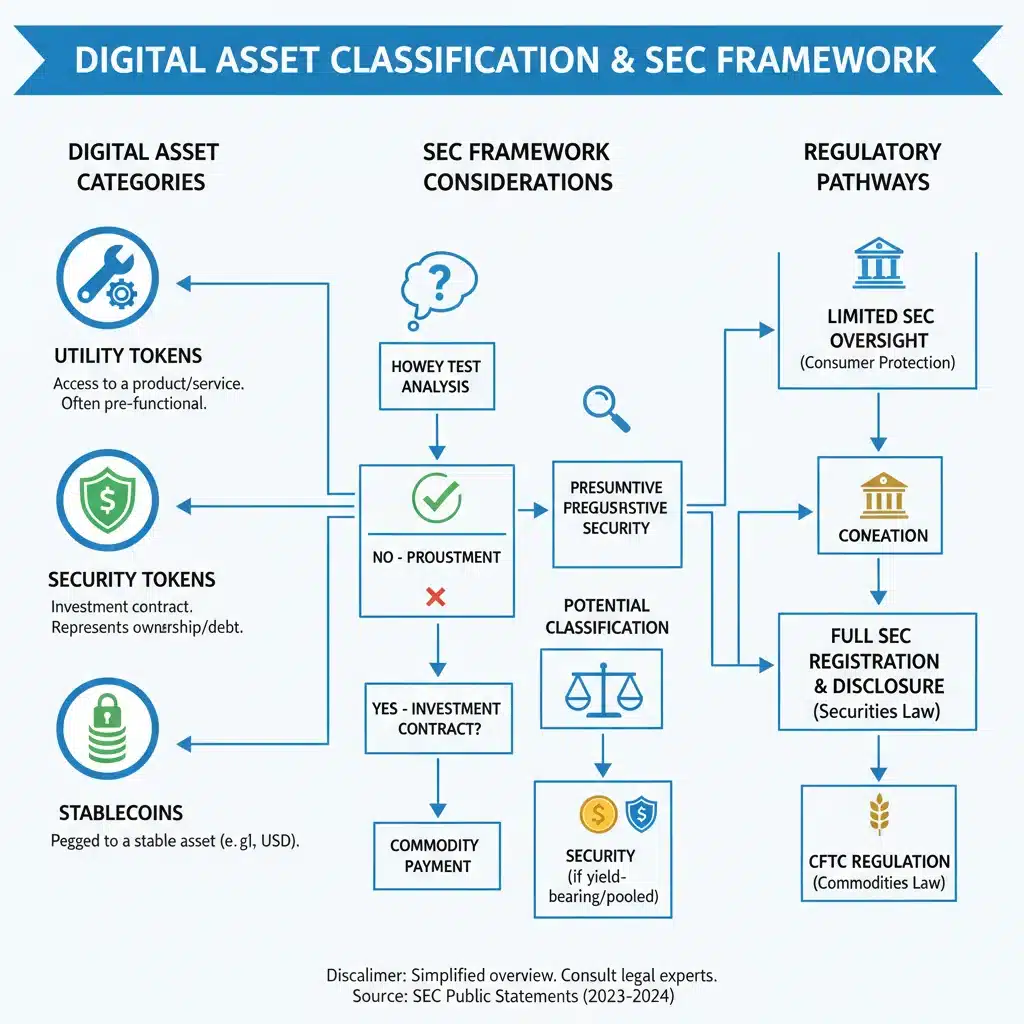
Perhaps the most critical aspect of the new framework is its detailed approach to classifying digital assets. The ‘Howey Test,’ a long-standing legal precedent for determining what constitutes an investment contract, has often been a point of contention in the crypto world. The 2026 framework aims to provide clearer guidance on when a digital asset falls under the purview of securities law. This will likely involve a multi-factor analysis, considering elements such as decentralization, utility, marketing efforts, and the expectations of profit derived from the efforts of others. This clarity is crucial, as it dictates whether an asset needs to be registered with the SEC, and what disclosure and reporting requirements apply.
2. Registration Requirements for Digital Asset Platforms and Intermediaries
A significant portion of the SEC Digital Asset Framework will focus on regulating platforms that facilitate the trading, exchange, or custody of digital assets deemed securities. This could mean that many existing crypto exchanges, brokers, and even some DeFi protocols will need to register as national securities exchanges, broker-dealers, or alternative trading systems (ATSs). Registration entails rigorous compliance obligations, including robust cybersecurity measures, capital requirements, anti-money laundering (AML) and know-your-customer (KYC) protocols, and fair pricing mechanisms. This move is designed to bring these platforms in line with traditional financial intermediaries, ensuring a level playing field and enhanced investor protection.
3. Custody and Safeguarding of Digital Assets
The framework will establish stringent rules around the custody of digital assets. Given the unique technological characteristics of cryptocurrencies – particularly the challenges related to private key management and the irrevocability of transactions – secure and transparent custody solutions are paramount. The SEC is expected to mandate that custodians of digital assets meet specific standards for safeguarding client assets, including robust internal controls, insurance coverage, and segregation of client funds. This is a direct response to past incidents of hacks and insolvencies that have resulted in significant losses for investors.
4. Disclosure and Reporting Obligations for Issuers
For digital assets classified as securities, the framework will impose comprehensive disclosure and reporting obligations on their issuers. This means projects will need to provide detailed information to the public about their technology, business model, financial health, management team, and risk factors – similar to what publicly traded companies are required to do. The goal is to ensure that investors have access to all material information necessary to make informed investment decisions, thereby reducing information asymmetry and promoting market efficiency.
5. Market Surveillance and Enforcement
The SEC Digital Asset Framework will also bolster the SEC’s capabilities for market surveillance and enforcement in the digital asset space. This includes leveraging advanced analytics to detect manipulative trading practices, insider trading, and other forms of market misconduct. The SEC’s enforcement division will likely see an expansion of resources and expertise dedicated to digital assets, ensuring that violations of the new rules are met with swift and appropriate action. This increased oversight aims to instill greater confidence in the integrity of digital asset markets.
Impact on 15% of U.S. Crypto Holdings: A Closer Look
The SEC’s estimate that the new framework will directly impact 15% of all U.S. crypto holdings is a significant figure, underscoring the breadth and depth of its reach. This 15% is not a random number; it likely represents a substantial portion of assets that the SEC currently views as unregistered securities or assets traded on non-compliant platforms. Understanding which types of holdings will be most affected is crucial for investors and market participants.
Security Tokens and Their Issuers
Digital assets explicitly designed as security tokens, representing ownership in real-world assets (like real estate, equity, or debt), will undoubtedly fall squarely within the framework’s scope. Issuers of these tokens will face stricter registration, disclosure, and ongoing reporting requirements. For investors, this means enhanced protection and more transparent information, but it also means these tokens will be subject to the same regulatory burdens as traditional securities, potentially affecting liquidity and market access.
Unregistered ICOs and Projects
Many projects that conducted Initial Coin Offerings (ICOs) in the past without registering them as securities offerings with the SEC could be heavily impacted. If the tokens from these ICOs are still widely held and traded in the U.S., their issuers may face enforcement actions or be compelled to register their tokens retroactively. This could lead to delistings from exchanges, liquidity issues, and potential legal ramifications for both issuers and, in some cases, early investors.
DeFi Protocols and Decentralized Exchanges (DEXs)
The regulatory treatment of decentralized finance (DeFi) protocols and decentralized exchanges (DEXs) remains one of the most complex areas. While the ethos of DeFi emphasizes decentralization, many protocols still have identifiable founders, development teams, or governance structures that could be deemed to exert sufficient control to classify associated tokens as securities. The SEC Digital Asset Framework will likely provide specific criteria for evaluating the ‘decentralization’ of a protocol and determine when a DEX might be considered an unregistered exchange or ATS. This could necessitate significant structural changes for many DeFi projects operating in the U.S. market.
Stablecoins and Their Regulation
While often viewed as distinct from other digital assets, stablecoins, especially those pegged to fiat currencies, could also see increased scrutiny under the framework, particularly concerning their reserves and the entities that manage them. While some stablecoins might be regulated under banking laws or other commodity frameworks, the SEC could assert jurisdiction if they are deemed to possess characteristics of securities, particularly if they offer yield or are marketed as investment products. This would require enhanced transparency regarding their backing and operational resilience.
Implications for Retail and Institutional Investors
For retail investors, the framework promises greater protection through enhanced disclosures and regulated platforms. However, it might also lead to reduced access to certain riskier or non-compliant digital assets. Institutional investors, who often prioritize regulatory clarity, may find the new framework appealing, potentially leading to increased participation from traditional finance players. This could, in turn, bring more capital and maturity to the digital asset markets, but also more stringent compliance demands.
Preparing for the 2026 SEC Digital Asset Framework: A Roadmap
The implementation of the SEC Digital Asset Framework by 2026 is not a distant event; it requires immediate and strategic preparation from all stakeholders within the digital asset ecosystem. Proactive engagement and adaptation will be key to navigating this new regulatory landscape successfully.
For Digital Asset Issuers and Project Teams:
- Legal Review and Token Analysis: Conduct a thorough legal analysis of your digital asset to determine its likely classification under the new framework. This may involve engaging specialized legal counsel to assess its characteristics against the SEC’s evolving criteria.
- Compliance Infrastructure Development: If your asset is likely to be classified as a security, begin developing the necessary compliance infrastructure for registration, disclosure, and reporting. This includes robust internal controls, audit capabilities, and investor relations functions.
- Decentralization Strategy: For projects aiming for true decentralization to potentially avoid securities classification, accelerate efforts to genuinely decentralize governance, control, and development. Document these efforts meticulously.
- Engage with Regulators: Where appropriate, consider engaging with the SEC through appropriate channels to seek interpretive guidance or discuss novel approaches to compliance.
For Digital Asset Platforms and Intermediaries (Exchanges, Custodians):
- Registration Preparation: Begin the process of evaluating the requirements for registering as a national securities exchange, broker-dealer, or ATS. This is a complex and time-consuming process that requires significant resources.
- Enhanced AML/KYC: Review and bolster your Anti-Money Laundering (AML) and Know Your Customer (KYC) procedures to meet the heightened standards expected for regulated financial institutions.
- Cybersecurity and Data Security: Invest in state-of-the-art cybersecurity measures and data protection protocols to safeguard client assets and sensitive information.
- Custody Solutions: Ensure your custody solutions meet the forthcoming stringent requirements for asset segregation, insurance, and operational resilience.
- Market Surveillance Tools: Implement advanced market surveillance tools to detect and prevent market manipulation and other illicit activities.

For Investors (Retail and Institutional):
- Understand Your Holdings: Assess your current digital asset portfolio. Research the projects you are invested in and understand their potential classification under the new framework.
- Due Diligence: Conduct enhanced due diligence on new investments, paying close attention to whether the issuer is compliant with SEC regulations or has a clear path to compliance.
- Utilize Regulated Platforms: Prioritize using platforms that are either already regulated or actively working towards compliance with the SEC Digital Asset Framework.
- Stay Informed: Continuously monitor SEC announcements and industry developments. The regulatory landscape is dynamic, and staying informed is crucial.
Potential Challenges and Opportunities of the SEC Digital Asset Framework
No major regulatory overhaul comes without its challenges and opportunities. The SEC Digital Asset Framework is no exception. While it aims to foster a more mature market, its implementation will undoubtedly present hurdles for some, while opening new avenues for others.
Challenges:
- Compliance Burden: The cost and complexity of compliance will be significant, particularly for smaller projects and startups. This could lead to market consolidation and potentially stifle innovation in certain niches.
- Jurisdictional Arbitrage: Some projects or platforms may choose to relocate outside the U.S. to avoid the stringent regulations, potentially leading to a ‘brain drain’ or a shift in market activity to less regulated jurisdictions.
- Defining ‘Decentralization’: The SEC’s interpretation of true decentralization will be critical and potentially contentious, especially for DeFi protocols. Reaching a universally accepted definition that is both legally sound and technologically practical will be challenging.
- Enforcement Scope: The sheer volume and diversity of digital assets will test the SEC’s enforcement capabilities. Identifying and pursuing all non-compliant actors will be a monumental task.
Opportunities:
- Increased Institutional Adoption: Regulatory clarity is a major catalyst for institutional investment. The framework could unlock significant capital from traditional financial institutions that have been hesitant to enter the crypto space due to regulatory uncertainty.
- Enhanced Investor Confidence: A regulated market offers greater protection and transparency, which can boost confidence among retail investors and attract a broader demographic to digital assets.
- Innovation in Compliance: The need for robust compliance solutions will drive innovation in areas like RegTech (regulatory technology) and blockchain-based identity verification.
- Market Maturation: The framework will likely weed out fraudulent or poorly conceived projects, leading to a more mature, stable, and reputable digital asset market in the long run.
- Global Leadership: By establishing a comprehensive framework, the U.S. could set a precedent for global digital asset regulation, influencing international standards and fostering greater interoperability.
The Road Ahead: Evolution and Adaptation
The 2026 SEC Digital Asset Framework is not the final word on digital asset regulation; rather, it is a significant milestone in an ongoing evolutionary process. As technology continues to advance and new forms of digital assets emerge, the framework will undoubtedly need to adapt. The SEC has indicated a willingness to engage with the industry and adjust its approach as new challenges and opportunities arise. This iterative process of regulation and innovation will be crucial for maintaining a dynamic yet secure digital asset ecosystem.
The success of the framework will depend not only on the SEC’s implementation but also on the industry’s willingness to embrace and adapt to the new rules. Collaboration between regulators, innovators, legal experts, and market participants will be essential to ensure that the framework achieves its objectives without stifling the very innovation it seeks to oversee. The digital asset landscape is on the cusp of a new era, one defined by greater structure, transparency, and accountability. Those who anticipate and strategically prepare for these changes will be best positioned to thrive.
Conclusion: A New Dawn for Digital Assets
The impending 2026 SEC Digital Asset Framework marks a pivotal moment for the cryptocurrency and blockchain industries in the United States. By providing clearer definitions, stringent registration requirements, enhanced custody rules, and robust disclosure obligations, the SEC aims to bring order and integrity to a market that has often operated in the shadows of regulatory uncertainty. While the direct impact on 15% of U.S. crypto holdings is significant, the indirect effects will be felt across the entire ecosystem, reshaping how digital assets are perceived, developed, and traded.
This comprehensive framework is a testament to the growing recognition of digital assets as a legitimate and powerful force in global finance. It represents a move towards integrating these innovative technologies into the broader financial system, rather than treating them as an isolated phenomenon. For investors, it promises a safer and more transparent environment. For innovators, it offers a clearer path to market, albeit with increased compliance burdens. As the 2026 deadline approaches, proactive engagement, strategic planning, and a deep understanding of the new regulatory landscape will be paramount for all participants. The future of digital assets in the U.S. is not just about technology; it’s about establishing a robust, fair, and secure market for the next generation of financial innovation under the watchful eye of the SEC Digital Asset Framework.
Author