US Treasury Report: Crypto Adoption Surges Past 30% Nationally by 2026

US Treasury Department’s Latest Report: Cryptocurrency Adoption Rates Exceed 30% Nationally in Early 2026
The financial world is abuzz with the groundbreaking revelation from the US Treasury Department. A recent report, shedding light on the evolving digital financial landscape, indicates that crypto adoption rates have dramatically surged, surpassing the 30% mark nationally by early 2026. This milestone signifies a pivotal shift in how Americans perceive and interact with their finances, moving beyond traditional banking paradigms into the decentralized future. This comprehensive analysis will delve into the nuances of this report, explore the driving forces behind this unprecedented growth, and discuss the far-reaching implications for individuals, businesses, and regulatory bodies across the United States.
Understanding the US Treasury’s Landmark Report on Crypto Adoption Rates
The US Treasury Department’s report, titled ‘Digital Asset Integration: A National Economic Review 2026,’ offers an in-depth look at the current state of cryptocurrency engagement within the United States. Unlike previous surveys that focused on awareness or speculative interest, this report specifically measures active crypto adoption rates, defined by individuals or entities holding, transacting, or utilizing cryptocurrencies for goods, services, or investment purposes. The 30% figure is not merely a statistical anomaly; it represents a significant portion of the American population actively participating in the digital asset economy.
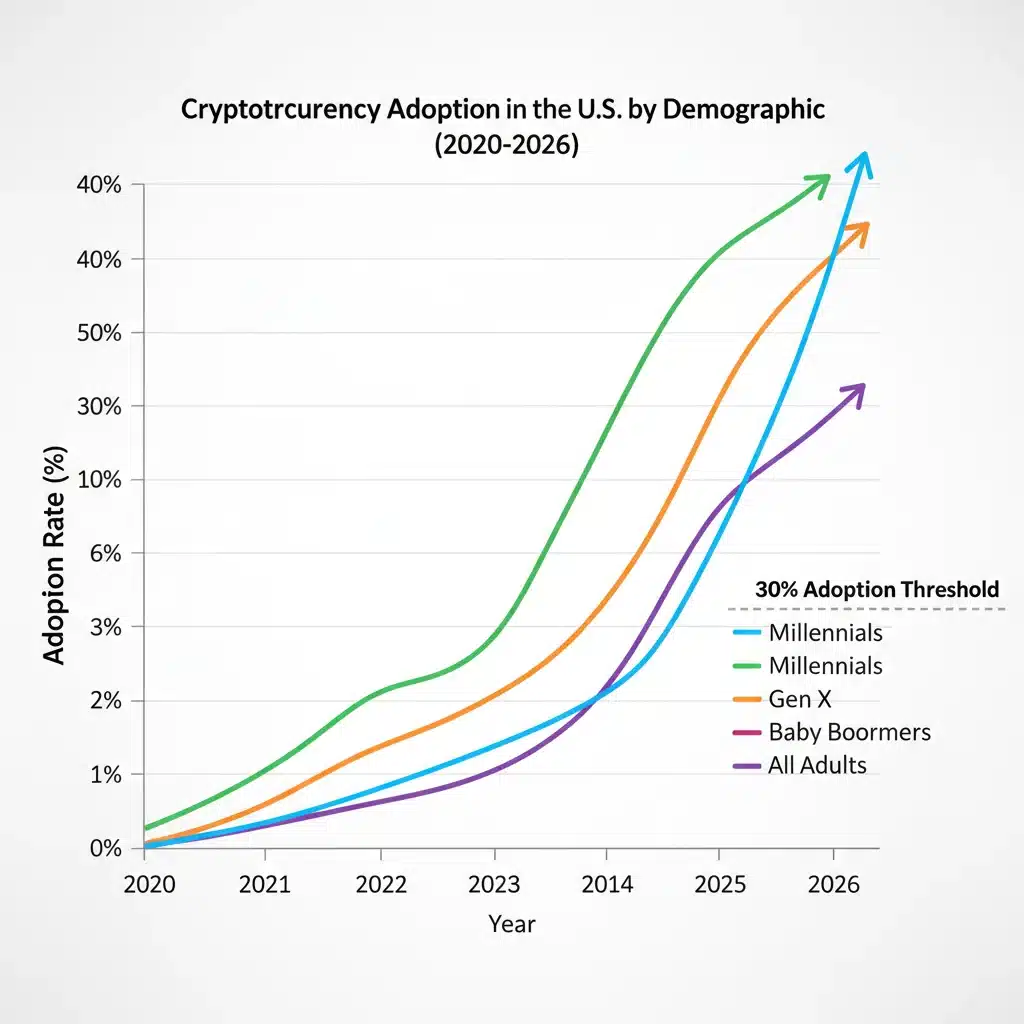
The methodology employed by the Treasury Department involved a multi-faceted approach, combining anonymized transaction data from regulated exchanges, self-reported surveys, and economic modeling to provide a holistic view. Key findings highlight that this adoption isn’t confined to a specific demographic or geographic region. While early adopters were often tech-savvy younger generations, the report clearly demonstrates a broadening appeal, with increasing participation from older age groups and diverse socioeconomic backgrounds. This widespread embrace underscores a growing trust and understanding of digital assets, moving them from the periphery to a more central role in mainstream finance.
The report also details the types of cryptocurrencies most commonly adopted. Bitcoin and Ethereum remain dominant, but stablecoins, particularly those pegged to the US dollar, have seen a remarkable surge in utility for everyday transactions and remittances. This indicates a maturing market where users are not solely driven by speculative gains but also by the practical benefits of digital currencies, such as faster transactions, lower fees, and enhanced financial inclusion. The implications of these findings are profound, suggesting a future where digital assets are an integral part of the national economic fabric, necessitating a proactive and adaptive regulatory framework.
Drivers Behind the Surging Crypto Adoption Rates
Several converging factors have contributed to the accelerated crypto adoption rates observed in the US. Understanding these drivers is crucial for forecasting future trends and developing effective strategies for both industry participants and policymakers.
Increased Accessibility and User-Friendliness
The proliferation of user-friendly platforms and applications has significantly lowered the barrier to entry for cryptocurrency ownership. Exchanges like Coinbase, Binance.US, and Kraken have streamlined the process of buying, selling, and managing digital assets, making it as simple as using a traditional banking app. Furthermore, the integration of crypto purchasing options into popular payment apps and financial services has made it easier for individuals to acquire and utilize digital currencies without extensive technical knowledge. This ease of access has been a cornerstone in broadening the appeal beyond tech enthusiasts.
Growing Institutional Investment and Corporate Acceptance
The past few years have witnessed a dramatic increase in institutional interest and investment in cryptocurrencies. Major corporations, hedge funds, and even some pension funds are now allocating portions of their portfolios to digital assets. This institutional endorsement provides a strong signal of legitimacy and stability, encouraging individual investors who might have previously been hesitant. Additionally, a growing number of businesses, from small online retailers to large enterprises, are accepting cryptocurrencies as payment, further integrating them into the commercial ecosystem and boosting practical crypto adoption rates.
Inflationary Pressures and Macroeconomic Uncertainty
Persistent inflationary pressures and global macroeconomic uncertainties have prompted many Americans to seek alternative stores of value and investment opportunities. Cryptocurrencies, particularly those with fixed supplies like Bitcoin, are increasingly viewed as a hedge against inflation and a means to diversify traditional portfolios. The narrative of digital assets as ‘digital gold’ has resonated with a significant segment of the population looking to protect their wealth in an unpredictable economic climate. This desire for financial resilience has undoubtedly fueled increased interest and adoption.
Technological Advancements and Innovation
The rapid evolution of blockchain technology and the emergence of new applications have also played a critical role. Decentralized Finance (DeFi) platforms offer novel financial services, including lending, borrowing, and yield farming, often with more attractive rates than traditional banking. Non-Fungible Tokens (NFTs) have captivated a new generation of digital collectors and creators, expanding the utility of blockchain beyond mere currency. These innovations continue to attract new users and foster a dynamic ecosystem that encourages exploration and participation, thereby driving up crypto adoption rates.
Implications of Widespread Crypto Adoption
The surpassing of 30% national crypto adoption rates carries significant implications across various sectors, signaling a transformative period for the US economy and its regulatory landscape.
For the Financial Sector
Traditional financial institutions are facing increasing pressure to adapt. Banks are exploring offering crypto services, from custody solutions to direct trading, to retain customers and attract new ones. The rise of digital assets challenges the existing payment infrastructure, pushing for more efficient and cost-effective cross-border transactions. Fintech companies that embrace blockchain technology are poised for substantial growth, while those that resist may find themselves at a disadvantage. This shift necessitates a re-evaluation of business models, risk management strategies, and customer service approaches within the banking and finance industry.
For Regulatory Bodies and Government Policy
The 30% adoption mark serves as a strong impetus for comprehensive and clear regulatory frameworks. The US Treasury Department, along with other agencies like the SEC and CFTC, will likely accelerate efforts to establish guidelines for consumer protection, market integrity, anti-money laundering (AML), and taxation. The current patchwork of regulations is unsustainable with such high adoption. A unified and coherent approach is essential to foster innovation while mitigating risks. This could include clear definitions for different types of digital assets, licensing requirements for service providers, and international cooperation to address the global nature of cryptocurrencies. The report itself is a testament to the government’s recognition of the need for policy adaptation.
For Individuals and Consumers
For the average American, widespread crypto adoption rates mean more choices and potentially greater financial autonomy. Access to financial services may expand, particularly for unbanked and underbanked populations. However, it also brings a heightened need for financial literacy regarding digital assets, understanding volatility, security best practices, and the complexities of decentralized finance. Consumers will need to be educated on how to safely manage their digital assets, identify scams, and understand the tax implications of their crypto activities. The responsibility for self-custody and personal security becomes paramount.
For Businesses and Commerce
Businesses that accept cryptocurrency payments can tap into a new customer base and potentially reduce transaction fees associated with traditional payment processors. This can be particularly beneficial for international trade, simplifying cross-border payments and reducing foreign exchange costs. However, companies must also navigate the volatility of crypto assets, implement robust security measures, and comply with evolving accounting and tax regulations related to digital currencies. The integration of blockchain technology can also streamline supply chains, enhance transparency, and create new business models, pushing companies to innovate their operational strategies.
Challenges and Opportunities Ahead
While the surge in crypto adoption rates presents immense opportunities, it also brings forth a unique set of challenges that need to be addressed to ensure sustainable growth and integration.
Regulatory Clarity and Harmonization
The most pressing challenge remains the need for clear, consistent, and comprehensive regulation. The current lack of a unified framework creates uncertainty for businesses and investors alike. Opportunities lie in developing smart, forward-thinking regulations that protect consumers without stifling innovation. This involves balancing security concerns with privacy, and fostering a competitive environment that allows both established players and new entrants to thrive. The US Treasury’s report will undoubtedly serve as a foundational document for these ongoing policy discussions.
Security and Consumer Protection
With increased adoption comes an increased risk of scams, fraud, and cyberattacks. Protecting users’ digital assets and personal information is paramount. Opportunities exist for developing more secure wallets, improving exchange security protocols, and implementing robust consumer education programs. Regulatory bodies will need to play a crucial role in enforcing standards and providing recourse for victims of illicit activities. The integrity of the crypto ecosystem depends on building and maintaining user trust.
Scalability and Infrastructure
As more people use cryptocurrencies, the underlying blockchain networks must be able to handle increased transaction volumes efficiently. Scalability solutions, such as layer-2 protocols and alternative consensus mechanisms, are critical for supporting widespread adoption without compromising speed or cost. Investment in robust and resilient digital infrastructure will be essential to ensure that the growing demand for crypto services can be met effectively. This also includes the development of interoperable systems that allow different blockchain networks to communicate seamlessly.
Environmental Concerns
The energy consumption of certain cryptocurrency mining processes, particularly proof-of-work systems, has raised environmental concerns. As crypto adoption rates climb, so does the scrutiny on its ecological footprint. Opportunities lie in transitioning to more energy-efficient consensus mechanisms (like proof-of-stake), investing in renewable energy sources for mining operations, and developing sustainable blockchain technologies. Addressing these concerns is vital for the long-term viability and public acceptance of digital assets.

The Future Landscape: What’s Next After 30% Crypto Adoption?
Reaching 30% national crypto adoption rates is not an endpoint but a significant waypoint on a longer journey towards a more digitized financial future. The next phase will likely involve deeper integration of digital assets into everyday life and the traditional economy.
Mainstream Integration and Utility
Expect to see cryptocurrencies used more frequently for everyday purchases, bill payments, and salaries. The rise of central bank digital currencies (CBDCs) in various nations, while distinct from decentralized cryptocurrencies, could also accelerate public familiarity and comfort with digital forms of money, indirectly boosting general crypto acceptance. Loyalty programs, rewards systems, and even government benefits could explore blockchain-based solutions, further embedding digital assets into the fabric of society.
Evolution of Financial Services
The competitive landscape between traditional finance and decentralized finance will continue to evolve, likely leading to a hybrid model. Banks may offer integrated crypto accounts, and DeFi protocols may become more regulated and user-friendly. The focus will shift from simply holding crypto to actively utilizing it for a wider array of financial services, including mortgages, loans, and insurance, all powered by blockchain technology. This convergence will redefine financial intermediation and create new avenues for wealth creation and management.
Global Impact and Interoperability
The US’s high crypto adoption rates will influence global trends. As one of the world’s largest economies, its embrace of digital assets will likely encourage other nations to accelerate their own adoption and regulatory efforts. International cooperation on standards for cross-border crypto transactions, data sharing, and regulatory harmonization will become increasingly important. The vision of a truly global, interconnected digital financial system, where value can be transferred seamlessly across borders, moves closer to reality.
Education and Workforce Development
The growing digital asset economy will necessitate a significant investment in education and workforce development. Universities and vocational schools will need to expand their curricula to include blockchain technology, cryptocurrency management, and digital asset law. A skilled workforce will be crucial for innovation, security, and the effective management of this new financial paradigm. This includes not only technical roles but also legal, compliance, and financial advisory positions specializing in digital assets.
Conclusion
The US Treasury Department’s report confirming over 30% national crypto adoption rates by early 2026 marks a watershed moment in financial history. It signifies that cryptocurrencies are no longer a niche interest but a significant and growing component of the American financial landscape. While challenges related to regulation, security, and infrastructure remain, the opportunities for innovation, financial inclusion, and economic growth are immense. As the nation moves further into the digital age, understanding and adapting to the evolving role of digital assets will be paramount for policymakers, businesses, and individuals alike. The journey is just beginning, and the next few years promise to be transformative for the future of finance in the United States and globally.
Author