Treasury Department Warns of Increased Crypto Scams by 2026
The US Treasury Department projects a 40% surge in crypto scams by 2026, necessitating immediate and comprehensive consumer education to combat increasingly sophisticated fraudulent schemes targeting digital asset investors.
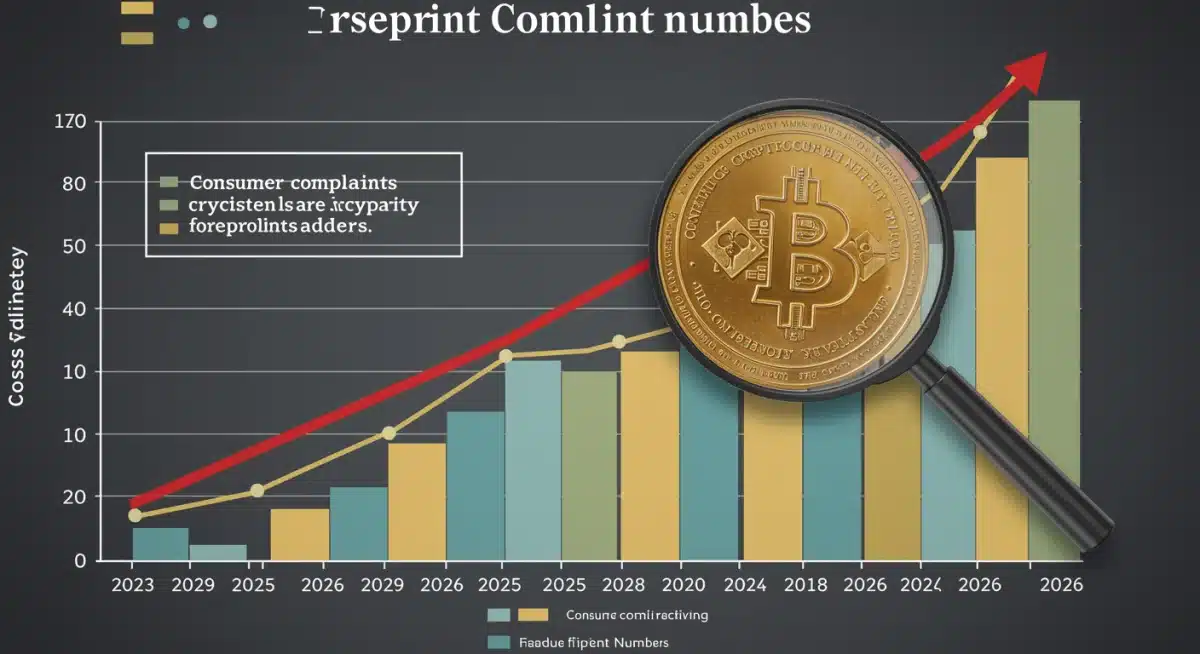
The US Treasury Department has issued a stark warning, indicating a projected 40% rise in consumer complaints related to crypto scams leading into 2026. This alarming forecast underscores the escalating threats within the digital asset landscape and emphasizes the critical need for heightened awareness and robust protective measures among investors. As the cryptocurrency market continues its rapid evolution, so too do the tactics employed by fraudsters, making informed vigilance more crucial than ever.
Understanding the Escalating Threat of Crypto Scams
The digital frontier of cryptocurrency, while promising immense opportunities, has also become a fertile ground for illicit activities. The Treasury Department’s recent warning regarding a significant increase in crypto scams by 2026 is not merely a statistic; it’s a call to action for every individual participating in or considering entering the crypto space. This projected 40% rise in consumer complaints highlights a concerning trend where sophisticated fraudsters are exploiting both technological vulnerabilities and human psychology to defraud unsuspecting investors.
These scams are evolving rapidly, moving beyond simple phishing attempts to highly elaborate schemes that mimic legitimate investment opportunities. The anonymity and decentralized nature of many cryptocurrencies, while offering benefits, also present challenges for tracing fraudulent transactions and recovering lost assets. Understanding the mechanisms behind these scams is the first step toward effective prevention and safeguarding one’s digital wealth.
Common Types of Crypto Scams
Fraudsters employ a diverse array of tactics to ensnare victims. Recognizing these common methods is crucial for protection.
- Phishing and Impersonation: Scammers create fake websites, emails, or social media profiles that closely resemble legitimate crypto exchanges or financial institutions, tricking users into revealing their private keys or login credentials.
- “Pump and Dump” Schemes: These involve artificially inflating the price of a low-value cryptocurrency through misleading promotions, then selling off holdings once the price peaks, leaving other investors with worthless assets.
- Fake Investment Platforms: Fraudsters lure victims with promises of impossibly high returns on investments through sophisticated-looking but entirely fictitious trading platforms.
- Romance Scams: Scammers build emotional connections with victims over time, eventually manipulating them into sending cryptocurrency for supposed emergencies or investment opportunities.
The increasing sophistication of these methods means that even experienced investors can fall prey if they are not constantly vigilant. The digital landscape demands a proactive approach to security and a healthy skepticism towards offers that seem too good to be true.
The Treasury Department’s Alarming Projections for 2026
The US Treasury Department’s forecast of a 40% surge in crypto scam complaints by 2026 is based on current trends and the anticipated growth of the cryptocurrency market. This projection serves as a critical indicator of the challenges ahead for both regulators and consumers. The report emphasizes that as more individuals and institutions adopt digital assets, the attack surface for bad actors expands considerably, necessitating a stronger regulatory framework and enhanced public awareness campaigns.
This rise is not just about the volume of complaints but also the increasing financial losses incurred by victims. The department’s analysis suggests that the evolving nature of these scams, combined with a lack of comprehensive understanding among some new investors, creates a perfect storm for fraudulent activities. The warning highlights the urgent need for a multi-faceted approach involving government agencies, industry stakeholders, and individual users to mitigate these risks effectively.
Factors Contributing to the Rise in Scams
Several underlying factors contribute to the projected increase in crypto scams.
- Market Volatility: The inherent volatility of cryptocurrency markets can create a sense of urgency and fear of missing out (FOMO), which scammers exploit by promising stable or guaranteed returns.
- Technological Complexity: For many, the technical aspects of cryptocurrency, including wallets, blockchain, and decentralized finance (DeFi), remain complex, making it easier for fraudsters to deceive users with technical jargon and false promises.
- Regulatory Gaps: While regulations are evolving, the global and decentralized nature of crypto markets means there are still gaps that scammers can exploit, especially across international borders.
- Social Engineering: Scammers are increasingly adept at social engineering, manipulating individuals into making poor decisions through psychological tactics rather than direct technical attacks.
The Treasury’s warning is a crucial piece of information for anyone involved in the crypto ecosystem. It underscores that while innovation is welcome, it must be matched with robust security measures and a well-informed user base to prevent widespread financial harm. The department is actively working on strategies to counter these rising threats, but individual vigilance remains paramount.
Impact on Consumer Confidence and Market Stability
The pervasive threat of crypto scams, and the Treasury Department’s warning about their projected increase, has significant implications for consumer confidence and the overall stability of the cryptocurrency market. When individuals lose substantial amounts of money to fraudulent schemes, it erodes trust in digital assets as a legitimate investment class. This erosion of trust can deter new investors, slow down adoption, and even lead to increased regulatory scrutiny that might stifle innovation.
Furthermore, a market plagued by widespread fraud can experience periods of instability as investors become more risk-averse. The perception of an unregulated ‘Wild West’ environment, while not entirely accurate, is reinforced by frequent reports of scams, making it harder for reputable projects and legitimate innovators to thrive. Maintaining a secure and trustworthy environment is essential for the long-term health and widespread acceptance of cryptocurrencies.
Protecting Your Digital Assets
Safeguarding your crypto investments requires a combination of technical precautions and informed decision-making.
- Two-Factor Authentication (2FA): Always enable 2FA on all your crypto accounts, including exchanges and wallets, to add an extra layer of security.
- Hardware Wallets: For significant holdings, consider using hardware wallets (cold storage) to keep your private keys offline and protected from online threats.
- Verify Sources: Double-check the legitimacy of any website, email, or social media account claiming to be a crypto service provider. Look for official URLs and verified badges.
- Research Thoroughly: Before investing in any new project or platform, conduct extensive research. Look for whitepapers, team backgrounds, community reviews, and genuine use cases.
The impact of scams extends beyond individual financial loss; it affects the entire ecosystem. As such, collective efforts from users, platforms, and regulators are necessary to build a resilient and secure future for digital finance. The Treasury’s warning serves as a catalyst for these essential protective measures.
Regulatory Responses and Industry Initiatives
In response to the escalating threat of crypto scams and the Treasury Department’s projections, both governmental bodies and industry players are intensifying their efforts to combat fraud. Regulators are exploring new frameworks and enforcement mechanisms to bring greater accountability and transparency to the crypto space, aiming to close the loopholes that fraudsters currently exploit. This includes discussions around enhanced KYC (Know Your Customer) and AML (Anti-Money Laundering) procedures for decentralized platforms.
Concurrently, cryptocurrency exchanges and blockchain companies are implementing more robust security protocols, improving fraud detection systems, and launching educational initiatives for their users. The goal is to create a safer environment where legitimate innovation can flourish without being overshadowed by illicit activities. Collaboration between public and private sectors is becoming increasingly vital to stay ahead of sophisticated scam operations.
Key Regulatory and Industry Actions
Several strategies are being deployed to mitigate the risks associated with crypto scams.
- Enhanced Law Enforcement Collaboration: Agencies like the FBI, IRS, and Treasury Department are working more closely to track, investigate, and prosecute crypto-related financial crimes, often leveraging advanced blockchain analytics tools.
- Clearer Regulatory Guidelines: Governments are striving to provide clearer guidelines for crypto businesses, which can help legitimize the industry and make it harder for fraudulent entities to operate under false pretenses.
- Consumer Education Campaigns: Many organizations are launching public awareness campaigns to educate individuals about common scam tactics and best practices for securing their digital assets.
- Platform Security Upgrades: Crypto exchanges are continuously upgrading their security infrastructure, including stronger encryption, multi-signature wallets, and AI-powered anomaly detection systems to identify suspicious activities.
These concerted efforts aim to build a more secure and trustworthy digital asset ecosystem. While no system can be entirely immune to fraud, a proactive and collaborative approach significantly strengthens defenses against the evolving landscape of crypto scams. The ongoing dialogue between regulators and innovators is crucial for striking the right balance.
Consumer Vigilance: Your First Line of Defense
While regulatory bodies and industry leaders work to fortify the crypto ecosystem, individual consumer vigilance remains the most critical line of defense against scams. The Treasury Department’s warning about the projected increase in crypto scams by 2026 underscores that personal responsibility in safeguarding digital assets is paramount. It is not enough to simply invest; one must also be an informed and cautious participant in this dynamic financial space.
Scammers often prey on a lack of knowledge, urgency, or greed. Developing a keen eye for red flags, understanding the basic principles of blockchain security, and adopting a skeptical mindset towards unsolicited offers are essential habits for any crypto holder. The digital world requires a proactive approach to personal security that mirrors the precautions taken in traditional financial dealings, if not exceeding them.
Essential Practices for Personal Security
Empowering yourself with knowledge and adopting secure habits can significantly reduce your risk.
- Never Share Private Keys: Your private keys are the access to your funds. Never share them with anyone, under any circumstances. Legitimate services will never ask for them.
- Beware of Unsolicited Offers: Be extremely wary of messages, emails, or social media posts promising guaranteed high returns, free crypto, or opportunities that seem too good to be true.
- Use Strong, Unique Passwords: Employ complex passwords for all your crypto-related accounts and use a password manager to keep track of them securely.
- Stay Informed: Regularly follow reputable crypto news sources, government advisories, and security updates to stay aware of new scam tactics and protective measures.
By internalizing these practices, consumers can dramatically reduce their vulnerability to the increasing number of crypto scams. The digital asset space offers tremendous potential, but only for those who approach it with a combination of enthusiasm and careful diligence. Being your own best security expert is the ultimate protection in this evolving environment.
Looking Ahead: Crypto Security in 2026 and Beyond
As we approach 2026, the landscape of cryptocurrency security will undoubtedly continue to evolve, shaped by technological advancements, regulatory developments, and the ongoing cat-and-mouse game between innovators and fraudsters. The Treasury Department’s warning is a crucial checkpoint, prompting a re-evaluation of current security strategies and a push towards more resilient solutions. The future of crypto adoption hinges on the ability to create an environment where users feel safe and confident in their digital asset interactions.
This future will likely see a greater emphasis on decentralized identity solutions, advanced AI-driven fraud detection, and international cooperation to combat cybercrime. Education will remain a cornerstone, ensuring that both new and seasoned investors are equipped with the knowledge to navigate complex digital environments safely. The challenges are significant, but so is the commitment from various stakeholders to build a more secure and trustworthy crypto future.
Predictions for Enhanced Security Measures
The coming years will likely bring several key advancements in crypto security.
- AI and Machine Learning for Fraud Detection: Sophisticated AI algorithms will become even more adept at identifying anomalous transactions and fraudulent patterns in real-time, offering proactive protection.
- Improved Wallet Security: Expect advancements in multi-party computation (MPC) wallets and hardware wallet technology, making private key management more secure and user-friendly.
- Global Regulatory Harmonization: Increased international cooperation among regulatory bodies will lead to more consistent and effective enforcement against cross-border crypto scams.
- Decentralized Identity Solutions: Blockchain-based identity systems could reduce reliance on centralized data, making phishing and impersonation attacks harder to execute effectively.
The trajectory towards 2026 and beyond suggests a concerted effort to make the crypto space more robust against threats. While the Treasury’s warning is sobering, it also serves as a powerful catalyst for necessary improvements, ensuring that the promise of digital finance can be realized safely and securely for all participants.
| Key Point | Brief Description |
|---|---|
| 40% Scam Increase Predicted | Treasury Department forecasts a significant rise in crypto scam complaints by 2026. |
| Evolving Scam Tactics | Fraudsters are using more sophisticated methods, including phishing, pump-and-dumps, and fake platforms. |
| Consumer Vigilance Crucial | Individual awareness and strong security practices are the primary defense against fraud. |
| Regulatory & Industry Response | Governments and crypto firms are enhancing security, regulations, and education to combat threats. |
Frequently Asked Questions About Crypto Scams
The Treasury Department warns of a projected 40% increase in consumer complaints related to crypto scams by 2026. This indicates a significant escalation in fraudulent activities targeting individuals involved in the cryptocurrency market, urging greater caution and improved security measures from all participants.
The anticipated rise is attributed to several factors including rapid market growth, increased adoption by new investors, the evolving sophistication of scam tactics, and existing regulatory gaps. Fraudsters are becoming more adept at exploiting both technological complexities and human behavioral patterns.
Common crypto scams include phishing attacks that steal credentials, “pump and dump” schemes that manipulate asset prices, fake investment platforms promising unrealistic returns, and romance scams where fraudsters build trust to solicit crypto funds. Vigilance against these forms is crucial.
Individuals can protect themselves by enabling two-factor authentication, using hardware wallets for significant holdings, thoroughly verifying all sources, never sharing private keys, and being skeptical of unsolicited offers. Continuous education on new scam tactics is also vital.
Regulators are working on enhanced frameworks and enforcement, while the industry is implementing stronger security protocols, improving fraud detection, and launching educational campaigns. Collaboration between government agencies and private firms is intensifying to create a safer crypto environment.
Conclusion
The Treasury Department’s warning about the projected 40% rise in crypto scams leading into 2026 serves as a critical reminder of the ongoing challenges within the digital asset space. While the potential of cryptocurrencies remains vast, it is inextricably linked to the ability of both individuals and institutions to effectively combat fraud. Through heightened consumer vigilance, robust regulatory frameworks, and continuous technological advancements, the crypto community can collectively work towards building a more secure, trustworthy, and resilient financial future. Staying informed and adopting proactive security measures are not just recommendations but necessities in this evolving landscape.
Author