2026 Fed Rate Hikes: 3-Month Household Impact Analysis

The economic landscape is constantly shifting, and few entities wield as much influence over the financial well-being of American households as the Federal Reserve. As we look ahead to 2026, the prospect of further Fed Rate Hikes 2026 looms large, prompting a critical need for U.S. households to understand and prepare for the potential financial ramifications. This comprehensive analysis will delve into the anticipated 3-month impact of such rate adjustments, offering insights and actionable strategies to navigate these changes.
Understanding the Federal Reserve’s Role and Interest Rate Mechanics
Before we dissect the impact, it’s crucial to grasp the Federal Reserve’s mandate and how its decisions, particularly regarding interest rates, ripple through the economy. The Fed, as the central bank of the United States, is tasked with maintaining maximum employment, stable prices, and moderate long-term interest rates. To achieve these goals, it employs various monetary policy tools, with the federal funds rate being paramount.
The federal funds rate is the target rate for overnight lending between banks. While households don’t directly borrow at this rate, changes to it influence a cascade of other interest rates across the financial system. When the Fed raises the federal funds rate, it generally makes borrowing more expensive for commercial banks. These banks, in turn, pass on these higher costs to consumers and businesses in the form of higher interest rates on loans, mortgages, credit cards, and other financial products.
Conversely, higher interest rates also tend to make saving more attractive, as banks offer better returns on deposits. The Fed typically raises rates to combat inflation, cooling down an overheating economy by making borrowing and spending less appealing. The anticipated Fed Rate Hikes 2026 are likely to be a continuation of this strategy, aiming to bring inflation back to the Fed’s long-term target of 2%.
The Rationale Behind Anticipated 2026 Fed Rate Hikes
Forecasting the Federal Reserve’s actions is a complex endeavor, influenced by a myriad of economic indicators. However, several key factors suggest that Fed Rate Hikes 2026 are a plausible scenario. Persistent inflationary pressures, even if moderated, could necessitate further tightening of monetary policy. Supply chain disruptions, geopolitical events, and robust consumer demand can all contribute to inflation that outpaces the Fed’s comfort zone.
Furthermore, a strong labor market, characterized by low unemployment rates and rising wages, can also fuel inflation. While a healthy job market is desirable, if wage growth significantly outpaces productivity gains, it can create a wage-price spiral, making goods and services more expensive. The Fed carefully monitors these dynamics to strike a balance between supporting economic growth and controlling inflation.
Finally, global economic trends and the actions of other central banks can also play a role. If major economies around the world are also experiencing inflationary pressures and raising rates, the Fed might follow suit to maintain relative stability and prevent capital outflows. The projections for Fed Rate Hikes 2026 are thus a calculated response to a dynamic and interconnected global economic environment.
Immediate 3-Month Impact: Mortgages and Housing Market
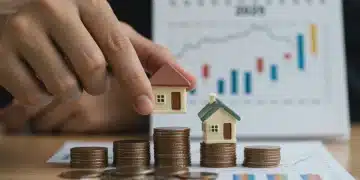
One of the most significant areas where Fed Rate Hikes 2026 will manifest is in the housing market, particularly for mortgages. For existing homeowners with fixed-rate mortgages, the immediate impact will be minimal; their monthly payments will remain unchanged. However, those with adjustable-rate mortgages (ARMs) will likely see their interest rates reset higher, leading to increased monthly payments within the 3-month timeframe of a rate hike.
New homebuyers will face a more challenging environment. Higher interest rates directly translate to higher borrowing costs for new mortgages. This means that for the same loan amount, monthly payments will be greater, reducing affordability. This could cool down the housing market, potentially leading to a deceleration in home price appreciation or even modest declines in some overheated markets. The initial 3-month period after a rate hike will be crucial for observing how quickly these changes are absorbed by the market.
Refinancing opportunities will also become less attractive. Homeowners looking to lower their interest rates or tap into their home equity through refinancing will find higher rates making such moves less financially beneficial. This could lead to a decrease in refinancing activity, impacting lenders and the broader mortgage industry. The aggregate effect of these changes on the housing market within the first quarter following the Fed Rate Hikes 2026 could be a noticeable shift in buyer behavior and market dynamics.
Credit Card Debt and Personal Loans: A Rapid Escalation
For U.S. households carrying credit card debt or personal loans, the impact of Fed Rate Hikes 2026 will be felt almost immediately and often more acutely than with mortgages. Most credit cards and many personal loans have variable interest rates, which are directly tied to the prime rate, which in turn is influenced by the federal funds rate. As such, any increase in the federal funds rate will quickly translate into higher annual percentage rates (APRs) on these forms of debt.
Within a 3-month window following a rate hike, consumers with outstanding credit card balances will likely see their minimum payments increase. While the initial increase might seem small, the compounding effect over time can significantly add to the total cost of debt. This makes it more expensive to carry a balance, potentially straining household budgets, especially for those already living paycheck to paycheck.
For new personal loans, auto loans, and other forms of consumer credit, interest rates will also trend upwards. This means that borrowing for new purchases, whether it’s a car, a major appliance, or consolidating debt, will become more expensive. Households planning such expenditures in 2026 should factor in these higher borrowing costs. The swift transmission of rate hikes to consumer credit makes this a particularly sensitive area for household finances during the initial post-hike period.
Savings and Investments: A Mixed Bag of Opportunities and Challenges
While borrowing becomes more expensive, Fed Rate Hikes 2026 can offer a silver lining for savers. Banks typically respond to higher federal funds rates by increasing the interest rates they offer on savings accounts, money market accounts, and certificates of deposit (CDs). Within the 3-month period, savers should start to see slightly better returns on their deposits, making it more attractive to keep money in these low-risk, liquid accounts.
However, the impact on investments is more nuanced. Higher interest rates can make fixed-income investments, such as bonds, more appealing compared to stocks. As bond yields rise, they offer a more competitive return, potentially drawing investment away from the stock market. This could lead to increased volatility or even downward pressure on stock prices in the short term, particularly for growth stocks that rely heavily on future earnings projections.
For investors, the 3-month period after a rate hike is an opportune time to re-evaluate portfolios. Rebalancing towards assets that perform better in a rising interest rate environment, such as value stocks or shorter-duration bonds, might be prudent. It’s also a time to consider the impact of inflation, as even with higher savings rates, real returns (returns after accounting for inflation) might still be modest. The strategic allocation of funds becomes paramount during periods of anticipated Fed Rate Hikes 2026.
Impact on Household Budgets and Disposable Income
The cumulative effect of higher borrowing costs on mortgages, credit cards, and personal loans can significantly squeeze household budgets. For many families, a substantial portion of their disposable income goes towards servicing debt. When these debt service costs rise, there’s less money available for other expenditures, such as groceries, utilities, transportation, and discretionary spending.
Within the initial 3-month period of Fed Rate Hikes 2026, households may experience a noticeable reduction in their disposable income. This can lead to adjustments in spending habits, with families prioritizing essential needs over non-essential items. Businesses that rely on consumer spending, particularly in sectors like retail and hospitality, might feel the pinch as consumers become more cautious with their money.
The psychological impact is also noteworthy. The perception of a tightening financial environment can lead to increased financial anxiety and a more conservative approach to spending and investing. This collective behavior can contribute to a broader economic slowdown, which is often the Fed’s intention when raising rates to curb inflation. Understanding this direct link to disposable income is crucial for households to proactively manage their finances.
Strategies for U.S. Households to Prepare for 2026 Fed Rate Hikes
Given the potential for Fed Rate Hikes 2026 and their multifaceted impact, proactive financial planning is essential. Here are several strategies U.S. households can employ to mitigate risks and optimize their financial standing:
1. Prioritize High-Interest Debt Repayment
The most immediate and impactful action is to aggressively pay down high-interest debt, such as credit card balances and personal loans with variable rates. Focusing on these debts before rates climb further can save a significant amount of money in interest payments. Consider strategies like the debt snowball or debt avalanche method to tackle these obligations systematically.
2. Evaluate Mortgage Options
If you have an adjustable-rate mortgage (ARM), assess whether refinancing into a fixed-rate mortgage is a viable option before the anticipated rate hikes. While rates may already be higher than in previous years, locking in a fixed rate can provide stability and predictability in your monthly housing costs. For prospective homebuyers, factor in potentially higher rates into your affordability calculations and consider getting pre-approved for a mortgage to lock in a rate for a certain period.
3. Boost Emergency Savings
A robust emergency fund is always a cornerstone of sound financial planning, but it becomes even more critical during periods of economic uncertainty and rising rates. Aim for at least three to six months’ worth of living expenses. As savings rates improve with Fed Rate Hikes 2026, your emergency fund can also generate slightly more interest, providing a small buffer against inflation.
4. Review and Adjust Your Budget
Conduct a thorough review of your household budget. Identify areas where you can cut back on discretionary spending to free up funds for debt repayment or savings. Even small adjustments can make a big difference over time, especially as borrowing costs increase. This proactive approach ensures you maintain financial flexibility.
5. Diversify Investment Portfolios
For investors, assess your portfolio’s sensitivity to interest rate changes. Consider diversifying into asset classes that tend to perform well in a rising rate environment. This might include shorter-duration bonds, dividend-paying stocks, or real estate (though the housing market itself can be volatile). Consult with a financial advisor to tailor a strategy that aligns with your risk tolerance and financial goals.
6. Seek Professional Financial Advice
Navigating the complexities of monetary policy and its effects on personal finance can be daunting. A certified financial planner can provide personalized guidance, help you understand the specific implications of Fed Rate Hikes 2026 for your situation, and assist in developing a robust financial plan.
Longer-Term Outlook Beyond the 3-Month Window
While our focus here is on the immediate 3-month impact, it’s important to consider the longer-term implications of sustained Fed Rate Hikes 2026. If the Fed continues on a path of rate increases throughout the year, the cumulative effect on household finances will become more pronounced. The housing market could see a more significant slowdown, with potential implications for home equity. Consumer spending might remain subdued, impacting economic growth more broadly.
However, the Fed’s goal is to achieve a ‘soft landing’ – curbing inflation without triggering a severe recession. The pace and magnitude of future rate hikes will depend heavily on incoming economic data, including inflation reports, employment figures, and global economic stability. Households should view the initial 3-month period as an indicator of trends that could evolve further, necessitating ongoing vigilance and adaptation in their financial strategies.
The long-term outlook also presents opportunities. A healthier, more stable economy with controlled inflation is beneficial for everyone. While the adjustment period with rising rates can be challenging, it ultimately aims to create a more sustainable economic environment. For households, this means that while initial costs may rise, the long-term benefits of price stability can outweigh the short-term difficulties.
Conclusion: Proactive Planning is Key for 2026 Fed Rate Hikes
The anticipated Fed Rate Hikes 2026 represent a significant economic event for U.S. households. The immediate 3-month impact will be felt across various financial aspects, from increased mortgage and credit card payments to potentially better savings returns and shifts in investment landscapes. While these changes can introduce financial strain, they also underscore the importance of proactive financial management.
By understanding the mechanisms behind the Fed’s decisions and implementing strategic financial adjustments – such as prioritizing debt repayment, re-evaluating mortgage options, boosting savings, and reviewing investment portfolios – households can effectively navigate the challenges and capitalize on the opportunities presented by a rising interest rate environment. The key is to stay informed, plan diligently, and adapt swiftly to ensure your financial well-being remains resilient in the face of evolving economic conditions.
Preparing now for the potential Fed Rate Hikes 2026 is not just about reacting to market changes; it’s about empowering your household with the knowledge and tools to maintain financial stability and achieve your long-term economic goals. The next few months will be critical, and those who plan ahead will be best positioned to weather the storm and emerge stronger.
Author