Maximize 2026 Educational Tax Credits: Up to $2,500 for US Citizens

U.S. citizens can significantly reduce their tax liability by utilizing educational tax credits in 2026, potentially saving up to $2,500 annually through strategic understanding and application of available programs.
As 2026 approaches, understanding how to navigate the complex world of tax benefits is crucial for every U.S. citizen. For those pursuing higher education, or supporting a student, maximizing your educational tax credits in 2026 offers a significant opportunity to save up to $2,500 annually. This comprehensive guide will illuminate the pathways to financial relief, ensuring you don’t leave valuable savings on the table.
Understanding the Landscape of Educational Tax Credits
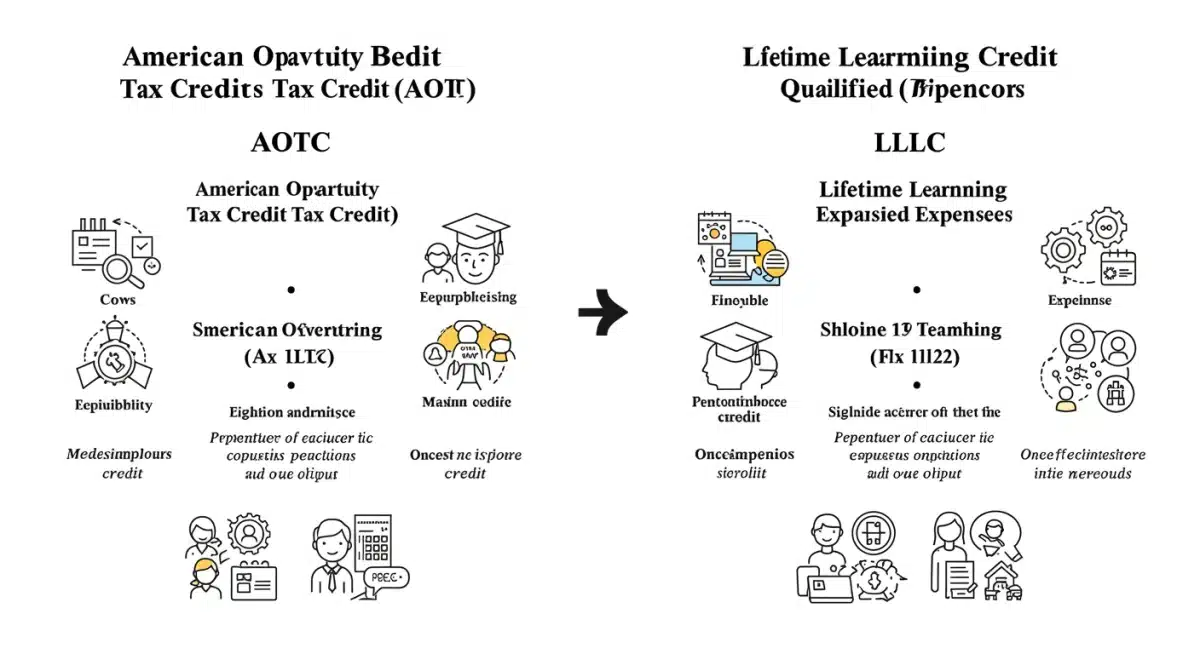
Educational tax credits are designed to help offset the cost of higher education by reducing the amount of income tax you owe. Unlike deductions, which only reduce your taxable income, credits directly lower your tax bill dollar-for-dollar. In 2026, two primary federal tax credits remain pivotal for students and their families: the American Opportunity Tax Credit (AOTC) and the Lifetime Learning Credit (LLC).
Navigating these credits requires careful attention to detail, as eligibility criteria and benefits differ significantly. It’s essential to identify which credit best suits your educational situation to maximize your potential savings. Many taxpayers overlook these opportunities, often due to a lack of awareness or confusion about the requirements.
The American Opportunity Tax Credit (AOTC)
The AOTC is particularly generous, offering a credit of up to $2,500 per eligible student. This credit is available for the first four years of post-secondary education. A key benefit is that 40% of the credit is refundable, meaning you could get up to $1,000 back as a refund, even if you owe no tax.
- Maximum Credit: Up to $2,500 per student.
- Refundable Portion: Up to $1,000.
- Eligibility: Student must be pursuing a degree or recognized educational credential for at least one academic period during the tax year.
- Qualified Expenses: Tuition, required fees, and course materials.
To qualify, the student must be enrolled at least half-time for at least one academic period beginning in the tax year. Income limitations also apply, so checking the most current IRS guidelines for 2026 is always recommended. This credit is often the most beneficial for undergraduate students.
The Lifetime Learning Credit (LLC)
The Lifetime Learning Credit offers a maximum annual credit of $2,000 per tax return, not per student. It’s ideal for graduate students, those taking courses to acquire job skills, or individuals pursuing continuing education without a degree focus. The LLC is non-refundable, meaning it can reduce your tax liability to zero, but you won’t receive any money back.
- Maximum Credit: Up to $2,000 per tax return.
- Eligibility: Available for undergraduate, graduate, or job skills courses.
- Qualified Expenses: Tuition and required fees.
- No Enrollment Requirement: Can be used for a single course.
Unlike the AOTC, there’s no limit on the number of years you can claim the LLC. This flexibility makes it a valuable option for lifelong learners. Income phase-outs are also a factor for this credit, so ensure your adjusted gross income (AGI) falls within the specified limits for 2026.
Understanding the nuances between these two credits is the first step toward maximizing your educational tax savings. While you cannot claim both credits for the same student in the same year, you might be able to claim different credits for different eligible students in your household.
Eligibility Requirements for 2026 Tax Credits
To successfully claim educational tax credits in 2026, understanding the specific eligibility criteria is paramount. Both the AOTC and LLC have distinct requirements regarding student status, educational institution, and taxpayer income. Meeting these criteria ensures your claim is valid and your tax savings are secured.
Failure to meet even one requirement can lead to your claim being denied, potentially resulting in penalties or delayed refunds. Therefore, a thorough review of your situation against the IRS guidelines is a necessary step before filing.
Student and Course Eligibility
For the American Opportunity Tax Credit, the student must be pursuing a degree or other recognized educational credential. This typically means enrollment in a program that leads to a certificate, associate’s, or bachelor’s degree. The student must also be enrolled for at least half of the normal full-time academic workload for at least one academic period beginning in the tax year.
- AOTC Student Status: Must be enrolled at least half-time in a degree program.
- LLC Course Type: Can be any course taken to acquire or improve job skills or for a degree program.
- Institution Requirements: Must be an eligible educational institution (virtually all accredited public, nonprofit, and proprietary postsecondary institutions).
The Lifetime Learning Credit is more flexible regarding student status. The student does not need to be pursuing a degree or be enrolled for a minimum number of hours. This makes it suitable for individuals taking a single course for professional development or personal enrichment. However, the course must be taken at an eligible educational institution.
Income Limitations and Phase-Outs
Both tax credits are subject to income limitations, which means your modified adjusted gross income (MAGI) must be below certain thresholds to claim the full credit or any portion of it. These thresholds are adjusted periodically for inflation, so it’s vital to refer to the 2026 IRS publications.
For 2026, if your MAGI exceeds the upper limit for a given credit, you will not be able to claim that credit. If your MAGI falls within the phase-out range, the amount of credit you can claim will be reduced proportionally. This is a critical point for financial planning, as it can influence your eligibility for other tax benefits as well.
Carefully calculating your MAGI and consulting the 2026 IRS guidelines will help you determine your eligibility and the potential value of these credits. These income thresholds are designed to direct benefits towards those who need them most, so understanding where you stand is key.
Qualifying Educational Expenses in 2026
Knowing which expenses qualify for educational tax credits is crucial for maximizing your savings. Not all costs associated with higher education are eligible, and distinctions exist between the AOTC and the LLC regarding what can be included. Proper tracking and documentation of these expenses are essential for a successful claim.
Overlooking eligible expenses means leaving money on the table, while attempting to claim ineligible expenses can lead to audit issues. Therefore, a clear understanding of what constitutes a qualified expense is a cornerstone of effective tax planning.
AOTC Qualified Expenses
The American Opportunity Tax Credit has a broader definition of qualified education expenses compared to the Lifetime Learning Credit. For the AOTC, these include tuition and fees required for enrollment or attendance, as well as course materials, books, supplies, and equipment needed for a course of study. This is a significant advantage, especially for students with high textbook costs.
- Tuition and Fees: Required for enrollment or attendance.
- Books and Supplies: Required course materials, even if not purchased directly from the institution.
- Required Equipment: Items mandated for a course of study.
It’s important that these expenses are paid for an eligible student enrolled at an eligible educational institution. Expenses paid with tax-free funds, such as scholarships or grants that are not taxable, generally cannot be used to calculate the credit. However, if the scholarship or grant is taxable, then it can be included.
LLC Qualified Expenses
For the Lifetime Learning Credit, qualified education expenses are more narrowly defined, primarily limited to tuition and fees required for enrollment or attendance. Unlike the AOTC, the LLC does not typically include expenses for books, supplies, and equipment unless they are required to be purchased from the institution as a condition of enrollment.
This distinction is vital. If your primary educational expenses are books and supplies, and you’re not eligible for the AOTC, the LLC might offer less relief in that specific area. Always keep detailed records, including receipts, for all educational expenses to substantiate your claims.
Neither credit typically allows for living expenses, transportation, or health insurance premiums to be counted as qualified education expenses. Focusing on the direct costs of instruction and required materials is the most effective approach to calculating your eligible expenses for 2026.
Strategic Planning for Maximum Savings in 2026
Maximizing your educational tax credits isn’t just about knowing the rules; it’s about strategic planning. For 2026, proactive steps can significantly influence the amount of credit you can claim. This involves coordinating benefits, managing income, and meticulous record-keeping.
Without a strategic approach, you might inadvertently disqualify yourself from a credit or claim a lesser amount than you’re entitled to. Effective planning ensures you leverage every available opportunity to reduce your tax burden.
Coordinating Benefits and Timing
You cannot claim both the AOTC and the LLC for the same student in the same tax year. Therefore, if a student is eligible for both, you must choose the one that provides the greater benefit. Generally, the AOTC offers a higher maximum credit and a refundable portion, making it more attractive for eligible undergraduate students.
Consider the timing of tuition payments. If you pay tuition for an academic period that begins in the first three months of 2027, you might be able to count those payments for your 2026 tax return. This can be a useful strategy if you are close to the income phase-out limits or need to meet the expense thresholds for a credit.
Impact of Scholarships and Other Aid
Scholarships, grants, and other tax-free educational assistance can impact the amount of qualified expenses you can claim. Generally, you must reduce your qualified expenses by any tax-free educational assistance received. However, if a portion of a scholarship or grant is taxable, that portion does not reduce your qualified expenses.
- Tax-Free Aid: Reduces qualified expenses.
- Taxable Aid: Does not reduce qualified expenses.
- 529 Plans: Distributions used for qualified expenses are tax-free, but those same expenses cannot be used to claim a credit.
For example, if you receive a scholarship that covers tuition and fees, you cannot count those covered expenses towards the AOTC or LLC. However, if you choose to make a portion of your scholarship taxable, you might be able to claim the credit for the expenses that the taxable portion of the scholarship covers. This is a complex area and often requires careful calculation and professional advice.
The interaction between educational tax credits and other forms of financial aid, including 529 plans, needs careful consideration. Using 529 plan distributions for qualified expenses makes those expenses ineligible for tax credits. Therefore, it’s often beneficial to pay enough qualified expenses out-of-pocket to claim the maximum tax credit, and then use 529 funds for the remaining expenses.
Documentation and Filing Your 2026 Tax Return
Accurate documentation is the backbone of a successful tax credit claim. For 2026, meticulously maintaining records of all educational expenses and financial aid received will simplify the filing process and provide crucial evidence if your return is ever questioned. Without proper documentation, even valid claims can be rejected.
The IRS requires specific forms and information to process educational tax credits. Understanding these requirements and preparing in advance will ensure a smooth and error-free tax season.
Key Documents to Keep
The most critical document you’ll receive from an eligible educational institution is Form 1098-T, Tuition Statement. This form reports the amount of qualified tuition and related expenses billed or paid, as well as scholarships and grants received. While Form 1098-T is a primary source of information, it may not include all eligible expenses, such as books and supplies for the AOTC.

- Form 1098-T: Tuition Statement from educational institution.
- Receipts: For books, supplies, and other qualified expenses not on 1098-T.
- Financial Aid Statements: Documentation of scholarships, grants, and other assistance.
- Bank Statements/Cancelled Checks: Proof of payment for educational expenses.
It’s advisable to keep all related receipts and records for at least three years from the date you file your return. This includes invoices, cancelled checks, and credit card statements that verify your qualified expenses. Digital copies are often sufficient, but ensure they are clearly legible and organized.
Filing with Form 8863
To claim either the American Opportunity Tax Credit or the Lifetime Learning Credit, you must file Form 8863, Education Credits (American Opportunity and Lifetime Learning Credits), with your Form 1040. This form guides you through the calculations and ensures you provide all necessary information to the IRS.
The instructions for Form 8863 are comprehensive and should be reviewed carefully. They detail the specific lines where you report your qualified expenses, income, and other relevant information. Many tax software programs can help automate this process, but understanding the underlying calculations is always beneficial.
Ensuring all information on Form 8863 aligns with your supporting documentation is critical. Discrepancies can trigger IRS inquiries, so double-checking your entries before submission is a wise practice. Filing accurately and completely is the best way to secure your educational tax credits.
Common Pitfalls and How to Avoid Them
While educational tax credits offer significant savings, various common pitfalls can prevent taxpayers from fully benefiting or even lead to complications with the IRS. Being aware of these issues for 2026 can help you proactively avoid them, ensuring a smoother tax filing experience and maximized credits.
Many of these challenges stem from misunderstandings of eligibility or inadequate record-keeping. By addressing these areas, you can safeguard your claim and optimize your tax situation.
Claiming the Wrong Credit or Double Dipping
One frequent mistake is attempting to claim both the AOTC and the LLC for the same student in the same year, which is not permitted. Another is misidentifying which credit offers the greater benefit for a particular student’s situation. For instance, an undergraduate student in their first four years typically benefits more from the AOTC due to its higher value and refundable component.
Furthermore, using the same qualified expenses to claim both an educational tax credit and a deduction (like the student loan interest deduction) is generally not allowed. You must choose which benefit to apply to which expense to avoid ‘double dipping’.
Incomplete or Inaccurate Documentation
The IRS relies heavily on accurate documentation to verify claims. A common pitfall is not retaining sufficient records for qualified expenses, especially those not reported on Form 1098-T, such as books and supplies purchased from third-party vendors. Inaccurate information on Form 1098-T itself can also cause issues.
- Verify Form 1098-T: Always check for accuracy and contact the institution for corrections if needed.
- Keep All Receipts: Maintain meticulous records for all qualified expenses.
- Understand Qualified vs. Non-Qualified: Be clear on what expenses are eligible for each credit.
If you receive an incorrect Form 1098-T, it is your responsibility to contact the educational institution to request a corrected version. Filing with incorrect information, even if it originated from the institution, can still lead to problems for you. Proactive review of all documentation is therefore essential.
Another area of confusion can be the treatment of employer-provided educational assistance. If your employer reimburses you for educational expenses, these reimbursements might reduce the amount of expenses you can claim for a tax credit, depending on whether the assistance was taxable or tax-free to you. Understanding this interaction prevents overstating your eligible expenses.
Future Outlook and Staying Informed for 2026 and Beyond
The landscape of tax laws is constantly evolving. While this guide focuses on maximizing your educational tax credits in 2026, staying informed about potential changes for subsequent years is crucial for continuous financial planning. Legislative adjustments can impact eligibility criteria, credit amounts, and income limitations, directly affecting your ability to save.
Proactive engagement with reliable information sources ensures you’re always prepared for upcoming tax seasons. This long-term perspective is key to sustained financial health and educational investment.
Anticipated Changes and Legislative Watch
While the core structure of the American Opportunity Tax Credit and the Lifetime Learning Credit is expected to remain stable for 2026, minor adjustments to income thresholds or expense definitions are always possible. These changes are typically announced by the IRS well in advance, often through official publications and news releases.
Keeping an eye on legislative discussions regarding education funding and tax reform can provide early insights into potential shifts. Websites of government agencies, reputable financial news outlets, and tax advisory services are excellent resources for staying current.
Resources for U.S. Citizens
The IRS website (IRS.gov) is the definitive source for tax information, including detailed publications on educational tax credits. Publication 970, Tax Benefits for Education, is particularly comprehensive and should be consulted for the most up-to-date rules and regulations for 2026. Additionally, professional tax advisors can offer personalized guidance.
- IRS.gov: Official source for all tax forms, publications, and updates.
- Publication 970: Detailed guide on tax benefits for education.
- Certified Tax Professionals: For complex situations or personalized advice.
Many educational institutions also provide resources and guidance to their students regarding Form 1098-T and other tax-related information. Don’t hesitate to reach out to their financial aid or bursar’s office if you have questions about your specific institutional documentation.
By staying informed and utilizing available resources, U.S. citizens can confidently navigate the complexities of educational tax credits. This continuous learning approach ensures that you are always in the best position to maximize your savings and support your educational endeavors or those of your dependents, not just in 2026, but in the years to come.
| Key Credit | Brief Description |
|---|---|
| American Opportunity Tax Credit (AOTC) | Up to $2,500 credit, 40% refundable, for first four years of post-secondary education. |
| Lifetime Learning Credit (LLC) | Up to $2,000 non-refundable credit for undergraduate, graduate, or job skills courses. |
| Qualified Expenses | Tuition, fees; AOTC also includes books/supplies. Excludes living costs. |
| Strategic Planning | Coordinate benefits, manage income, and keep meticulous records for optimal savings. |
Frequently Asked Questions About Educational Tax Credits
The AOTC is for the first four years of post-secondary education, offers up to $2,500 (with $1,000 refundable), and includes books. The LLC is for any post-secondary education year, offers up to $2,000 (non-refundable), and generally doesn’t include books unless required by the institution.
Yes, but it depends on the scholarship’s tax status. You must reduce your qualified expenses by any tax-free educational assistance received. If a portion of your scholarship is taxable, that portion does not reduce your qualified expenses, potentially allowing you to claim a credit.
You’ll primarily need Form 1098-T from your educational institution. Additionally, keep receipts for books, supplies, and other qualified expenses not listed on the 1098-T, along with financial aid statements and proof of payment.
Yes, both the AOTC and LLC are subject to modified adjusted gross income (MAGI) phase-out limits. If your MAGI exceeds these thresholds for 2026, your credit amount may be reduced or eliminated entirely. Always consult current IRS guidelines.
If your child is not your dependent, they would generally claim the educational tax credits themselves. If you claim them as a dependent, you may be able to claim the credit, provided all other eligibility requirements are met, including income limitations.
Conclusion
Maximizing your educational tax credits in 2026 is a tangible way for U.S. citizens to alleviate the financial burden of higher education. By diligently understanding the nuances of the American Opportunity Tax Credit and the Lifetime Learning Credit, meticulously tracking qualified expenses, and engaging in proactive financial planning, you can significantly reduce your tax liability. Staying informed about IRS guidelines and leveraging available resources will empower you to make the most of these valuable benefits, ensuring that your investment in education also yields substantial tax savings.
Author