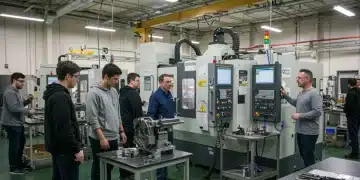
US Apprenticeship Programs 2025: Earn While You Learn
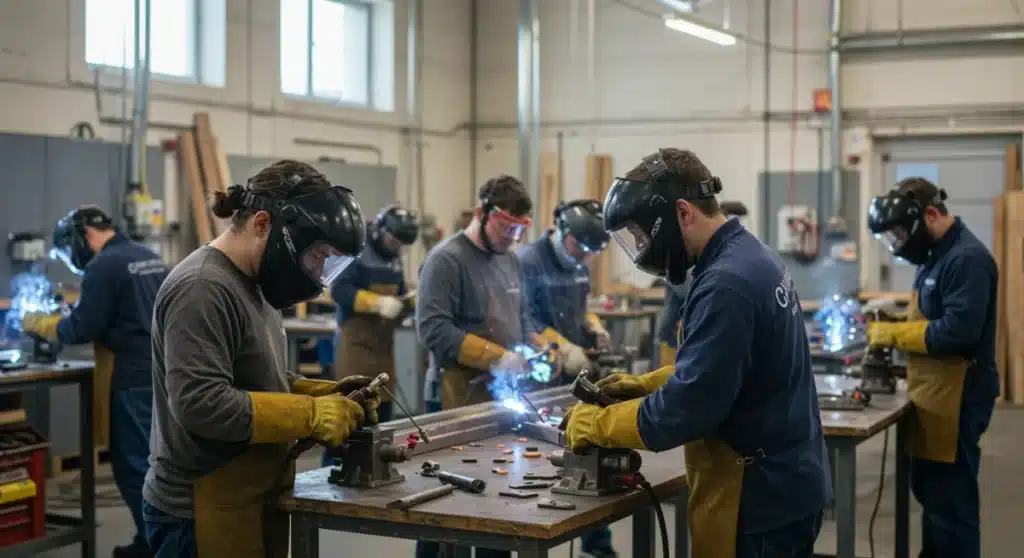
US apprenticeship programs provide an invaluable opportunity to gain practical skills and earn an income simultaneously, paving the way for rewarding careers in various skilled trades.
Are you considering a career path that offers both practical experience and financial stability from day one? US apprenticeship programs are gaining significant traction, providing a robust pathway to high-demand skilled trades. This comprehensive guide will illuminate how these programs function in 2025, detailing their benefits and how you can embark on a journey that allows you to earn while you learn.
What exactly are US apprenticeship programs?
US apprenticeship programs are structured training initiatives that combine on-the-job learning with related technical instruction. They are essentially an agreement between an apprentice and an employer, where the apprentice gains practical skills under the guidance of experienced professionals, all while earning a wage.
These programs are not new; they have a rich history in the United States, evolving over time to meet the demands of a changing economy. Today, they are a vital component of workforce development, offering a direct route to skilled employment without the burden of traditional four-year college debt.
The core components of an apprenticeship
Every registered apprenticeship program in the US typically includes several key elements designed to ensure a well-rounded and effective learning experience. Understanding these components is crucial for anyone considering this career path.
- Paid employment: Apprentices are paid employees from day one, receiving incremental wage increases as their skills develop.
- On-the-job training (OJT): A significant portion of the learning occurs through hands-on work, supervised by a journey-level worker.
- Related technical instruction (RTI): This classroom-based learning complements OJT, providing theoretical knowledge and foundational skills.
- Mentorship: Experienced workers guide and support apprentices throughout their training.
- National recognized credential: Upon completion, apprentices receive a portable, industry-recognized credential that validates their skills.
These programs are meticulously designed to ensure that apprentices not only master the technical aspects of their chosen trade but also develop critical soft skills such as problem-solving, teamwork, and communication. The blend of practical work and theoretical instruction creates highly competent and adaptable professionals.
Ultimately, US apprenticeship programs represent a powerful investment in human capital, benefiting both individuals seeking meaningful careers and businesses in need of skilled labor. They are a proven model for workforce development, offering a clear path to professional excellence and economic independence.
The benefits of choosing an apprenticeship in 2025
Opting for an apprenticeship in 2025 presents a compelling alternative to traditional higher education, especially for those who prefer hands-on learning and immediate entry into the workforce. The advantages extend beyond just avoiding student debt, encompassing career progression, skill development, and financial stability.
One of the most significant benefits is the opportunity to earn a competitive wage while simultaneously acquiring valuable skills. Unlike college students who often accrue substantial debt, apprentices are paid employees, allowing them to gain financial independence early in their careers. This financial aspect alone makes apprenticeships an attractive option for many.
Financial advantages and career growth
The financial benefits of apprenticeships are multifaceted. Apprentices begin earning a salary from their first day, with wages typically increasing as they advance through the program and acquire more skills. This structured wage progression provides a clear incentive for continuous learning and performance.
- No student debt: Apprenticeships eliminate the need for costly tuition fees and student loans.
- Immediate income: Apprentices receive a paycheck from the start, contributing to their financial well-being.
- Wage increases: Regular pay raises are built into the program structure as skills and experience grow.
- High earning potential: Graduates often command higher salaries than those with traditional degrees in similar fields.
Beyond the immediate financial gains, apprenticeships are also a springboard for long-term career growth. Upon completion, apprentices emerge as highly skilled professionals with industry-recognized credentials, making them highly sought after by employers. Many programs also offer pathways to further education or management roles within their respective industries.
The practical experience gained during an apprenticeship is invaluable, providing a significant edge in the job market. Employers often prefer candidates with proven hands-on experience, and apprenticeships deliver exactly that. This blend of earning, learning, and career advancement makes US apprenticeship programs an intelligent choice for ambitious individuals.
In-demand skilled trades for apprentices in 2025
The landscape of skilled trades is constantly evolving, driven by technological advancements, infrastructural needs, and shifting consumer demands. In 2025, several trades stand out for their high demand, offering promising career prospects for apprentices. These fields are not only essential for the functioning of modern society but also provide opportunities for innovation and specialization.
Understanding which trades are in high demand can help prospective apprentices make informed decisions about their career paths. These industries are actively seeking skilled workers, ensuring a robust job market for qualified individuals.
Top growth areas for apprenticeships
From construction to healthcare, the need for skilled labor is pervasive across various sectors. Specific trades are experiencing significant growth due to ongoing infrastructure projects, an aging workforce, and the integration of new technologies.
- Construction trades: Electricians, plumbers, HVAC technicians, and carpenters are continually in high demand due to new construction and maintenance needs.
- Manufacturing: Advanced manufacturing requires skilled machinists, welders, and industrial maintenance technicians to operate and maintain complex machinery.
- Healthcare: Medical assistants, surgical technologists, and pharmacy technicians are increasingly important roles within the healthcare system.
- Information technology: Cybersecurity analysts, network administrators, and software developers are emerging apprenticeship roles driven by digital transformation.
- Renewable energy: Wind turbine technicians and solar panel installers are critical for the growing clean energy sector.
These trades offer not only stable employment but also opportunities for continuous learning and adaptation to new technologies. Many of these roles are vital for economic stability and growth, ensuring that skilled workers will remain indispensable. Apprenticeships in these fields provide a direct entry point into rewarding and future-proof careers.
As the economy continues to evolve, the demand for adaptable and highly skilled professionals will only increase. Apprenticeship programs are perfectly positioned to meet this demand, providing individuals with the necessary training to thrive in these critical sectors.
How to find and apply for US apprenticeship programs
Navigating the process of finding and applying for US apprenticeship programs can seem daunting at first, but with the right resources and approach, it’s a straightforward journey. The key is to know where to look and what steps to take to maximize your chances of acceptance.
There are numerous avenues through which prospective apprentices can discover available programs, ranging from government-backed initiatives to industry-specific organizations. Each pathway offers unique opportunities and requirements, so it’s important to explore several options.

The first step often involves identifying the trades that align with your interests and skills. Once you have a clearer idea of your preferred field, you can begin your search for suitable apprenticeship opportunities.
Key resources for your apprenticeship search
Several platforms and organizations are dedicated to connecting individuals with apprenticeship programs. Leveraging these resources can significantly streamline your search process.
- Apprenticeship.gov: This official government website is a comprehensive database of registered apprenticeship programs across various industries.
- State workforce agencies: Many states have dedicated departments or offices that promote and list local apprenticeship opportunities.
- Labor unions: Unions often sponsor apprenticeships in trades like plumbing, electrical work, and carpentry.
- Industry associations: Organizations specific to particular trades frequently offer or endorse apprenticeship programs.
- Community colleges: Some community colleges partner with employers to provide the related technical instruction component of apprenticeships.
When applying, be prepared to demonstrate your interest, motivation, and any relevant foundational skills. Many programs require a high school diploma or GED, and some may include aptitude tests or interviews. Highlighting any prior work experience, even if unrelated, that showcases your work ethic and reliability can be beneficial.
The application process is an opportunity to showcase your potential and commitment to a challenging yet rewarding career path. Persistence and thorough preparation are key to successfully securing a spot in a competitive apprenticeship program.
The structure and progression of an apprenticeship
Understanding the structure and progression within a US apprenticeship program is essential for setting realistic expectations and planning your career trajectory. These programs are meticulously designed to ensure a systematic development of skills, leading to mastery of a trade and a recognized credential.
Apprenticeships are not simply entry-level jobs; they are comprehensive training pathways that typically span several years, combining practical work with formal instruction. The duration varies depending on the trade, but most programs last between one and five years.
Stages of apprentice development
An apprenticeship is a journey marked by distinct stages, each building upon the previous one. This structured progression ensures that apprentices gradually acquire expertise and responsibility.
Initially, apprentices begin with foundational tasks, learning basic safety procedures and familiarizing themselves with tools and equipment. As they gain confidence and demonstrate proficiency, they are gradually introduced to more complex assignments. This hands-on experience is complemented by classroom instruction, which provides the theoretical knowledge underpinning their practical work.
- Entry-level tasks: Learning basic tools, safety protocols, and foundational techniques.
- Intermediate skill development: Taking on more complex projects under supervision, applying theoretical knowledge.
- Advanced specialization: Mastering specialized techniques, problem-solving independently, and potentially mentoring newer apprentices.
- Journey-level worker: Achieving full competency, capable of performing all aspects of the trade independently.
Throughout the program, apprentices receive regular evaluations to assess their progress and identify areas for further development. Mentors play a crucial role in providing feedback and guidance, ensuring that apprentices stay on track to meet the program’s requirements. The successful completion of an apprenticeship culminates in a nationally recognized credential, signifying a high level of skill and competence.
This structured progression ensures that graduates are not only proficient in their trade but also possess the critical thinking and problem-solving skills necessary to excel in their careers. It’s a testament to the rigorous and thorough nature of US apprenticeship programs.
Future outlook: Apprenticeships in a changing economy
The role of US apprenticeship programs is becoming increasingly critical in a rapidly evolving global economy. As industries adapt to new technologies and workforce demands shift, apprenticeships offer a flexible and responsive solution for developing a skilled labor force. The future outlook for these programs is exceptionally positive, with continued growth and diversification expected.
Technological advancements, particularly in automation, artificial intelligence, and green energy, are creating new jobs and transforming existing ones. Apprenticeships are uniquely positioned to train individuals for these emerging roles, ensuring that the American workforce remains competitive and adaptable.
Adapting to technological shifts and new industries
Apprenticeship programs are not static; they are continually updated to reflect the latest industry standards and technological innovations. This adaptability is key to their relevance and effectiveness in preparing workers for the jobs of tomorrow.
For instance, the rise of renewable energy has led to new apprenticeships for wind turbine technicians and solar panel installers. Similarly, the growing importance of data and cybersecurity has spurred the development of IT apprenticeships. These programs demonstrate the capacity of apprenticeships to respond swiftly to economic changes.
- Integration of new technologies: Programs are incorporating training in AI, automation, and advanced manufacturing techniques.
- Expansion into new sectors: Growth in healthcare, IT, and clean energy apprenticeships.
- Focus on soft skills: Emphasis on critical thinking, adaptability, and problem-solving to complement technical skills.
- Increased diversity and inclusion: Efforts to attract a broader range of candidates to skilled trades.
Government initiatives and private sector investments are also contributing to the expansion and modernization of apprenticeship programs. There’s a growing recognition of their value in addressing skill gaps and fostering economic resilience. As the demand for specialized skills continues to outpace traditional educational pathways, apprenticeships will play an even more prominent role in shaping the future workforce.
The future of US apprenticeship programs is bright, promising a continuous supply of highly skilled professionals ready to meet the challenges and opportunities of a dynamic economy. They are a cornerstone of a robust workforce strategy, empowering individuals and strengthening industries.
Making the most of your apprenticeship experience
Embarking on an apprenticeship is a significant commitment, and making the most of this invaluable experience requires dedication, proactive engagement, and a willingness to continuously learn. It’s not just about showing up; it’s about actively participating, seeking knowledge, and building relationships that will serve you throughout your career.
Your apprenticeship is a unique opportunity to gain practical skills, build a professional network, and establish a strong foundation for your future. Maximizing this period will set you apart and open doors to advanced opportunities within your chosen trade.
Strategies for a successful apprenticeship
A proactive approach to your apprenticeship can significantly enhance your learning and career prospects. It involves more than just completing the required tasks; it’s about embracing every aspect of the learning environment.
Engage with your mentors and journey-level workers, ask questions, and take initiative. Showing genuine curiosity and a strong work ethic will not only accelerate your learning but also impress those who can provide valuable references and future opportunities. Remember, your mentors have a wealth of experience to share.
- Be proactive: Seek out learning opportunities and ask questions.
- Build relationships: Network with mentors, colleagues, and other apprentices.
- Embrace feedback: View constructive criticism as an opportunity for growth.
- Stay organized: Keep track of your progress, assignments, and learning objectives.
- Prioritize safety: Always adhere to safety protocols and best practices.
Beyond the technical skills, apprenticeships also provide a chance to develop crucial soft skills that are highly valued in any workplace. These include communication, problem-solving, teamwork, and time management. Actively working on these areas will make you a more well-rounded and effective professional.
The culmination of your apprenticeship is not just a certification; it’s the beginning of a fulfilling career built on solid skills and practical experience. By fully committing to the process, you can ensure that your apprenticeship experience is as rewarding and impactful as possible.
| Key Aspect | Brief Description |
|---|---|
| Earn While You Learn | Apprentices receive a salary from day one, with structured wage increases throughout their training period. |
| Skill Development | Programs combine hands-on job training with related technical instruction, ensuring comprehensive skill acquisition. |
| Career Advancement | Graduates earn nationally recognized credentials, leading to high-demand jobs and significant career growth opportunities. |
| Future-Proof Trades | Apprenticeships are adapting to new technologies and expanding into emerging sectors like IT and renewable energy. |
Frequently asked questions about US apprenticeship programs
The duration of a US apprenticeship program varies significantly by trade and industry, but most programs typically last between one to five years. This timeframe allows for comprehensive on-the-job training and related technical instruction, ensuring apprentices gain full competency in their chosen skilled trade.
Yes, apprentices are paid employees from the first day of their program. They receive a progressive wage, meaning their earnings increase incrementally as they acquire more skills and advance through the various stages of their apprenticeship. This earning potential is a significant benefit over traditional education.
Upon successful completion of a registered apprenticeship program, individuals receive a nationally recognized credential. This certification validates their mastery of a specific skilled trade and is highly valued by employers across the United States, enhancing their job prospects and career mobility.
While both provide career-focused training, apprenticeships combine paid on-the-job training with classroom instruction, making apprentices employees from day one. Vocational schools primarily focus on classroom learning, often requiring tuition. Apprenticeships offer direct entry into the workforce with immediate earnings and practical experience.
In 2025, highly sought-after trades for apprenticeships include electricians, plumbers, HVAC technicians, welders, and carpenters. Emerging fields like IT (cybersecurity, network administration) and renewable energy (wind turbine technicians, solar installers) are also experiencing significant demand for skilled apprentices.
Conclusion
US apprenticeship programs offer a dynamic and effective pathway for individuals seeking to build a rewarding career in skilled trades without accumulating significant educational debt. By integrating paid on-the-job training with structured technical instruction, these programs equip apprentices with practical skills, industry-recognized credentials, and a clear trajectory for career advancement. As the economy continues to evolve, apprenticeships remain a vital component of workforce development, adapting to new technologies and meeting the growing demand for skilled labor across various sectors. For those looking to earn while they learn and secure a stable, high-demand profession, a US apprenticeship program represents an intelligent and strategic choice for 2025 and beyond.
Author