Smart Investing 2026: 25% Portfolio in Emerging Markets for Higher Returns

The global investment landscape is in constant flux, shaped by technological advancements, geopolitical shifts, and evolving economic fundamentals. As we look towards 2026, one area consistently capturing the attention of savvy investors is the realm of emerging markets investing. These dynamic economies, characterized by rapid growth, expanding consumer bases, and often undervalued assets, present compelling opportunities for those willing to embrace a calculated level of risk. This article delves into why allocating a strategic 25% of your investment portfolio to emerging markets could be a smart move for achieving higher returns in the coming years, exploring the potential, the pitfalls, and the practical strategies for navigating this exciting frontier.
The Allure of Emerging Markets: Why 2026 is Key
Emerging markets are, by definition, economies that are transitioning from developing to developed status, typically characterized by lower-than-average per capita income but rapid economic growth. This growth often translates into significant investment opportunities, particularly when compared to more mature, slower-growing developed markets. For investors focusing on emerging markets investing, 2026 represents a confluence of factors that make this allocation particularly attractive.
Firstly, many emerging economies are benefiting from favorable demographic trends. Younger populations, a growing middle class, and increasing urbanization are driving domestic consumption and demand for goods and services. This internal demand can act as a buffer against global economic headwinds, providing a more stable growth trajectory. Secondly, technological adoption in these regions is often rapid, allowing them to leapfrog older technologies and implement cutting-edge solutions, from mobile banking to e-commerce, at an accelerated pace. This digital transformation fuels productivity and opens new avenues for business expansion.
Furthermore, many emerging market governments are increasingly focused on structural reforms, improving regulatory environments, and investing in critical infrastructure. These efforts enhance business confidence, attract foreign direct investment, and create a more predictable and efficient operating landscape for companies. The diversification benefits are also undeniable; emerging markets often have a low correlation with developed markets, meaning their performance can help to smooth out overall portfolio volatility and enhance risk-adjusted returns. By strategically engaging in emerging markets investing, investors can tap into these powerful secular trends.
Identifying the Growth Engines: Where to Focus Your 25%
Allocating 25% of your portfolio to emerging markets is a significant commitment, necessitating careful consideration of which specific regions and sectors offer the most promising prospects. While the term ’emerging markets’ encompasses a vast and diverse group of countries, a nuanced approach is crucial. Not all emerging markets are created equal, and their individual economic trajectories can vary wildly.
Consider countries with strong commodity bases that are benefiting from global demand, or those that are becoming manufacturing hubs for the world. Look for nations with robust domestic consumption stories, driven by a burgeoning middle class and favorable demographics. Technology, healthcare, and renewable energy sectors within these markets are often prime candidates for growth, as they address fundamental needs and capitalize on global trends.
For instance, countries in Southeast Asia, such as Vietnam and Indonesia, continue to show strong manufacturing growth and increasing consumer spending. India, with its massive population and digital transformation initiatives, presents a compelling long-term growth story. Certain Latin American economies are also undergoing significant economic reforms and attracting foreign investment. Even some African nations, though earlier in their development cycle, offer substantial long-term potential in specific sectors.
Diversification within your emerging markets investing allocation is paramount. Instead of putting all your eggs in one basket, spread your 25% across several countries and sectors to mitigate idiosyncratic risks. This approach allows you to capture growth from multiple sources while reducing the impact of any single market’s underperformance.
Understanding and Mitigating Risks in Emerging Markets Investing
While the potential for higher returns in emerging markets is attractive, it’s crucial to acknowledge and manage the inherent risks. These markets are typically more volatile than developed markets due to factors such as political instability, currency fluctuations, regulatory changes, and less mature financial systems. A successful emerging markets investing strategy hinges on a thorough understanding of these risks and implementing robust mitigation techniques.
Political risk is a significant concern. Changes in government, policy shifts, or social unrest can directly impact corporate earnings and investor confidence. Currency risk is another major factor; a weakening local currency against your home currency can erode investment gains, even if the underlying assets perform well. Liquidity can also be an issue, as some emerging markets have smaller, less liquid stock exchanges, making it harder to buy or sell large positions without impacting prices.
To mitigate these risks, consider several strategies. Firstly, a long-term investment horizon is essential. Short-term volatility is common, but patient investors are often rewarded as these economies mature. Secondly, thorough due diligence is vital. Understand the political landscape, economic policies, and corporate governance standards of the countries you invest in. Diversifying across different emerging markets, as mentioned earlier, is also a powerful risk management tool.
Furthermore, consider investing through well-managed exchange-traded funds (ETFs) or mutual funds specializing in emerging markets. These vehicles offer instant diversification across numerous companies and countries, are managed by professionals who monitor local conditions, and can provide access to markets that might be difficult for individual investors to navigate directly. Hedging currency exposure, where appropriate, can also protect against adverse currency movements, though this can add complexity and cost.
Strategic Allocation: How to Integrate 25% into Your Portfolio
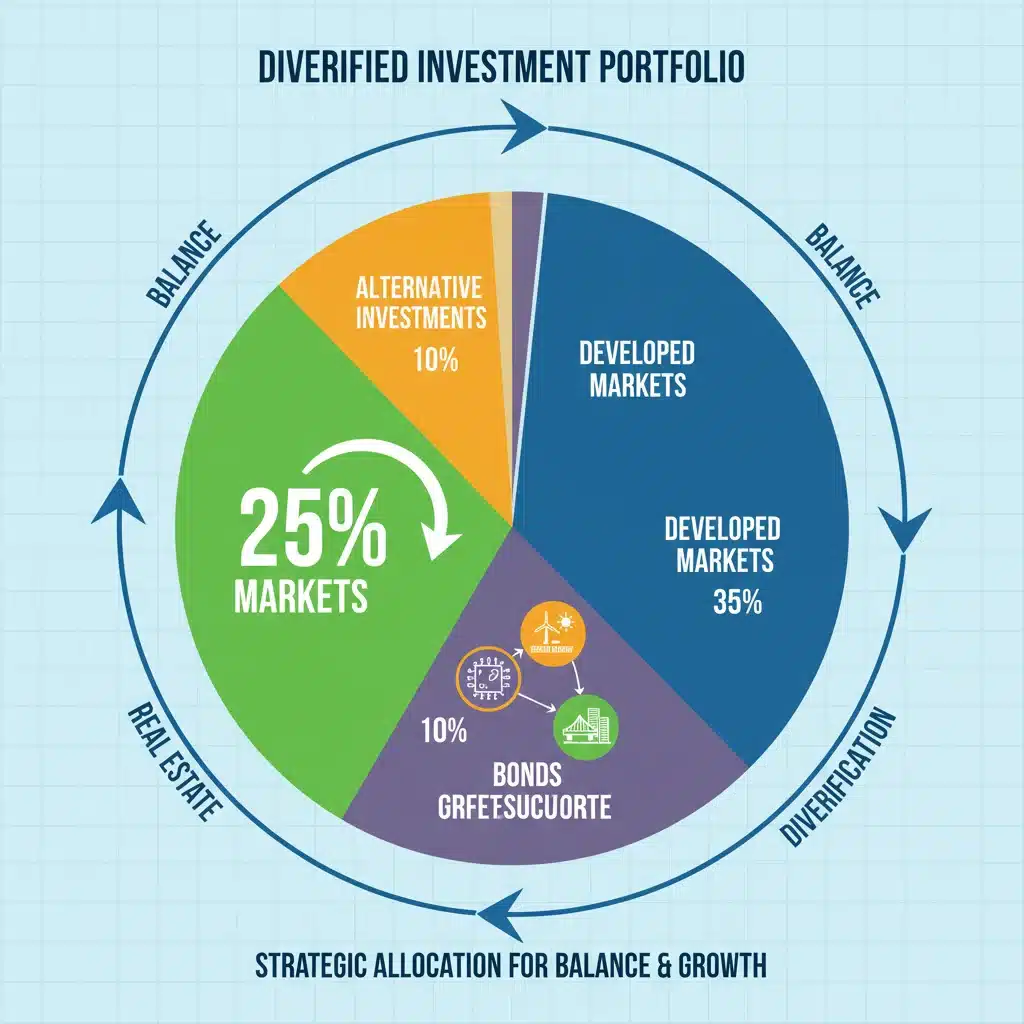
The decision to allocate 25% of your portfolio to emerging markets investing is a strategic one that should be integrated thoughtfully into your overall financial plan. This isn’t a one-size-fits-all recommendation; your specific allocation will depend on your individual risk tolerance, investment horizon, and financial goals. However, for investors seeking enhanced growth potential, a 25% stake can be a powerful catalyst.
Start by assessing your current portfolio’s exposure to international markets, particularly emerging ones. Many investors inadvertently have a ‘home bias,’ overly concentrating their investments in their domestic market. Rebalancing your portfolio to include a significant allocation to emerging markets can improve diversification and potentially boost returns.
Consider a phased approach. Instead of deploying the entire 25% at once, you might gradually build up your position over several months or even a year. This dollar-cost averaging strategy can help mitigate the risk of investing a lump sum at an unfavorable market peak. Regularly review and rebalance your portfolio to ensure that your emerging markets allocation remains at your target percentage, adjusting as market conditions change.
For instance, if your emerging markets investments perform exceptionally well and grow to 30% of your portfolio, you might trim some of those holdings to bring it back to 25% and reallocate the proceeds to other underperforming areas. Conversely, if emerging markets underperform and drop to 20%, you might consider adding to your position. This disciplined rebalancing ensures you’re consistently buying low and selling high, optimizing your emerging markets investing strategy.
Sector-Specific Opportunities within Emerging Markets
Within the broad category of emerging markets investing, certain sectors are poised for exceptional growth in 2026 and beyond. Identifying these sector-specific opportunities can help refine your 25% allocation and maximize your return potential.
Technology and Digital Transformation: Many emerging economies are experiencing a digital revolution. From e-commerce and fintech to cloud computing and artificial intelligence, technology companies in these regions are growing at an astonishing pace. A large, youthful, and increasingly tech-savvy population provides a fertile ground for innovation and adoption. Investing in leading tech firms or funds focused on digital transformation in emerging markets can yield significant rewards.
Consumer Discretionary: As the middle class expands in emerging markets, so does their purchasing power. This fuels demand for a wide range of consumer discretionary goods and services, from automobiles and electronics to travel and entertainment. Companies catering to this growing consumer base, particularly those with strong brand recognition and distribution networks, are excellent candidates for investment.
Renewable Energy and Infrastructure: Emerging markets often have significant energy needs and are increasingly turning to renewable sources to power their growth. Governments are investing heavily in solar, wind, and hydro projects, as well as upgrading traditional infrastructure like roads, ports, and telecommunications networks. Companies involved in these critical sectors stand to benefit from long-term government contracts and sustained demand. This focus on sustainable development also aligns with global ESG (Environmental, Social, and Governance) investing trends.
Healthcare: Improving living standards and aging populations in some emerging markets are driving demand for better healthcare services, pharmaceuticals, and medical technology. This sector offers defensive growth characteristics and is less susceptible to economic cycles, making it a potentially stable component of your emerging markets investing portfolio.
The Role of Geopolitics and Global Trends in Emerging Markets
No discussion of emerging markets investing would be complete without acknowledging the significant influence of geopolitics and broader global trends. These external factors can create both opportunities and challenges that investors must monitor closely.
Global trade policies, for instance, can heavily impact export-oriented emerging economies. Changes in tariffs, trade agreements, or supply chain dynamics can either bolster or hinder their economic growth. Similarly, the policies of major developed economies, particularly the United States and China, reverberate across emerging markets. Interest rate decisions by the US Federal Reserve, for example, can affect capital flows to emerging markets, influencing currency valuations and borrowing costs.
The ongoing shift towards a more multipolar world, with increasing economic power concentrated in Asia, also plays a crucial role. This rebalancing of global economic influence creates new trade routes, investment partnerships, and growth centers, many of which are in emerging market regions. Understanding these macro trends is vital for making informed decisions about your emerging markets investing strategy.
Furthermore, climate change and sustainability are becoming increasingly important drivers of investment. Emerging markets that are proactively addressing environmental challenges and transitioning to greener economies may attract more capital and benefit from global initiatives. ESG factors are no longer just a niche consideration but are becoming mainstream, influencing investor decisions and corporate behavior globally.

Practical Steps for Your 25% Allocation
Now that we’ve explored the ‘why’ and ‘where’ of emerging markets investing, let’s consider the ‘how’ for implementing your 25% allocation effectively.
- Define Your Risk Tolerance: Before committing a quarter of your portfolio, honestly assess your comfort level with volatility. Emerging markets are not for the faint of heart, but with a long-term view, the rewards can outweigh the risks.
- Research and Diversify: Don’t just pick a single country or company. Utilize broad-based emerging market ETFs or mutual funds that offer exposure to a basket of countries and sectors. Alternatively, if you have the expertise, select a diversified set of individual stocks across different emerging economies and industries.
- Understand Investment Vehicles: Common ways to invest include:
- Emerging Market ETFs: Offer broad diversification, low expense ratios, and liquidity.
- Emerging Market Mutual Funds: Actively managed, potentially offering higher returns through expert selection, but often come with higher fees.
- Individual Stocks: Requires significant research and understanding of local markets, suitable for experienced investors.
- American Depositary Receipts (ADRs): Allow US investors to buy shares of foreign companies on US exchanges.
- Monitor and Rebalance: Regularly review your emerging markets allocation relative to your overall portfolio. Rebalance periodically to maintain your target 25% exposure, buying more when prices are low and trimming when they’re high.
- Stay Informed: Keep abreast of geopolitical developments, economic data, and company-specific news in the emerging markets you’re invested in. This ongoing education is crucial for successful long-term emerging markets investing.
- Consider Professional Advice: If you’re unsure about navigating the complexities of emerging markets, consult with a financial advisor who specializes in international investing. They can help tailor a strategy that aligns with your financial goals and risk profile.
The Long-Term Vision: Beyond 2026
While our focus is on 2026, the opportunities in emerging markets investing are not fleeting. The underlying drivers of growth – demographic dividends, technological adoption, urbanization, and structural reforms – are long-term trends that will continue to shape the global economy for decades to come. By establishing a strategic position in these markets now, investors are not just chasing short-term gains but are positioning themselves to benefit from a significant rebalancing of global economic power.
The journey of emerging markets from developing to developed status is a continuous process, marked by periods of rapid expansion and occasional setbacks. A disciplined approach, characterized by diversification, a long-term perspective, and a willingness to withstand volatility, is key to harnessing their full potential. As these economies continue to mature, their financial markets will deepen, corporate governance will improve, and their resilience to external shocks will strengthen.
For investors looking to build a truly diversified and growth-oriented portfolio, a dedicated allocation to emerging markets investing is no longer a niche strategy but a fundamental component. The 25% target allocation serves as a robust guideline, encouraging investors to move beyond traditional boundaries and tap into the vibrant growth stories unfolding across the globe.
Conclusion
As we navigate the investment landscape towards 2026, the compelling narrative of emerging markets investing stands out. These dynamic economies offer a powerful combination of rapid growth, demographic advantages, technological innovation, and diversification benefits that can significantly enhance a well-constructed portfolio. While risks are inherent, a strategic 25% allocation, coupled with thorough research, diversification across regions and sectors, and a long-term perspective, positions investors for potentially higher returns.
By understanding the specific opportunities in technology, consumer discretionary, renewable energy, and healthcare, and by remaining vigilant about geopolitical and global economic trends, investors can effectively harness the power of emerging markets. The journey requires patience and discipline, but the potential rewards of participating in the growth stories of tomorrow’s economic powerhouses make emerging markets investing a cornerstone of smart portfolio management for the discerning investor.
Author