Cryptocurrency Mining 2026: Technologies, Sustainability, and Future Outlook

Cryptocurrency Mining in 2026: An Educational Overview of Technologies and Environmental Impacts
The world of cryptocurrency is in a constant state of flux, evolving at an exhilarating pace. As we gaze towards 2026, the landscape of cryptocurrency mining is poised for significant transformations, driven by technological innovations, increasing environmental consciousness, and evolving regulatory frameworks. This article aims to provide a comprehensive and educational overview of what to expect in crypto mining 2026, examining the cutting-edge technologies, the critical environmental impacts, and the pathways to a more sustainable future for this burgeoning industry.
The Evolution of Mining Technologies: Beyond ASIC Dominance
For years, Application-Specific Integrated Circuits (ASICs) have dominated the Bitcoin and other Proof-of-Work (PoW) cryptocurrency mining scenes, offering unparalleled computational power and efficiency. However, the future of crypto mining 2026 suggests a more diversified technological landscape. While ASICs will undoubtedly remain crucial for established PoW chains, advancements are not static. We anticipate ASICs becoming even more specialized, incorporating advanced cooling solutions like immersion cooling and liquid cooling to push performance boundaries while managing energy consumption more effectively. Research into quantum computing’s potential impact, though still nascent for practical mining applications, will continue to be a fascinating area of exploration, albeit unlikely to be mainstream by 2026.
Beyond hardware, software optimization will play an increasingly vital role. Mining pool algorithms will become more sophisticated, dynamically allocating resources based on profitability, network difficulty, and energy costs. Furthermore, the integration of Artificial Intelligence (AI) and Machine Learning (ML) in optimizing mining operations will become more commonplace. AI algorithms could predict optimal times for mining based on electricity prices, weather patterns (for renewable energy sources), and network congestion, leading to smarter, more efficient, and ultimately more profitable mining endeavors. This intelligent automation represents a significant leap forward in operational efficiency for crypto mining 2026.
The Rise of Proof-of-Stake and Alternative Consensus Mechanisms
Perhaps the most significant shift impacting crypto mining 2026 is the continued migration of major cryptocurrencies away from energy-intensive Proof-of-Work (PoW) to more energy-efficient consensus mechanisms, primarily Proof-of-Stake (PoS). Ethereum’s successful transition to PoS with ‘The Merge’ set a precedent, and other blockchain networks are likely to follow suit or explore similar alternatives. PoS eliminates the need for vast computational power, instead relying on validators who ‘stake’ their cryptocurrency as collateral to validate transactions and create new blocks. This fundamentally changes the economics and environmental footprint of securing a blockchain.
By 2026, we can expect a substantial portion of the cryptocurrency market capitalization to be secured by PoS or hybrid consensus models. This shift will have profound implications for hardware manufacturers, miners, and the energy sector. While it reduces the demand for specialized mining hardware, it introduces new challenges and opportunities related to staking pools, validator infrastructure, and the security of PoS networks. Understanding this paradigm shift is crucial for anyone looking to engage with crypto mining 2026.
Environmental Impact and the Push for Sustainability
The environmental impact of cryptocurrency mining, particularly PoW, has been a contentious issue. The substantial energy consumption and associated carbon emissions have drawn criticism from environmentalists, policymakers, and even within the crypto community. In crypto mining 2026, the pressure to adopt sustainable practices will be more intense than ever before. We anticipate a strong global push towards green mining initiatives.
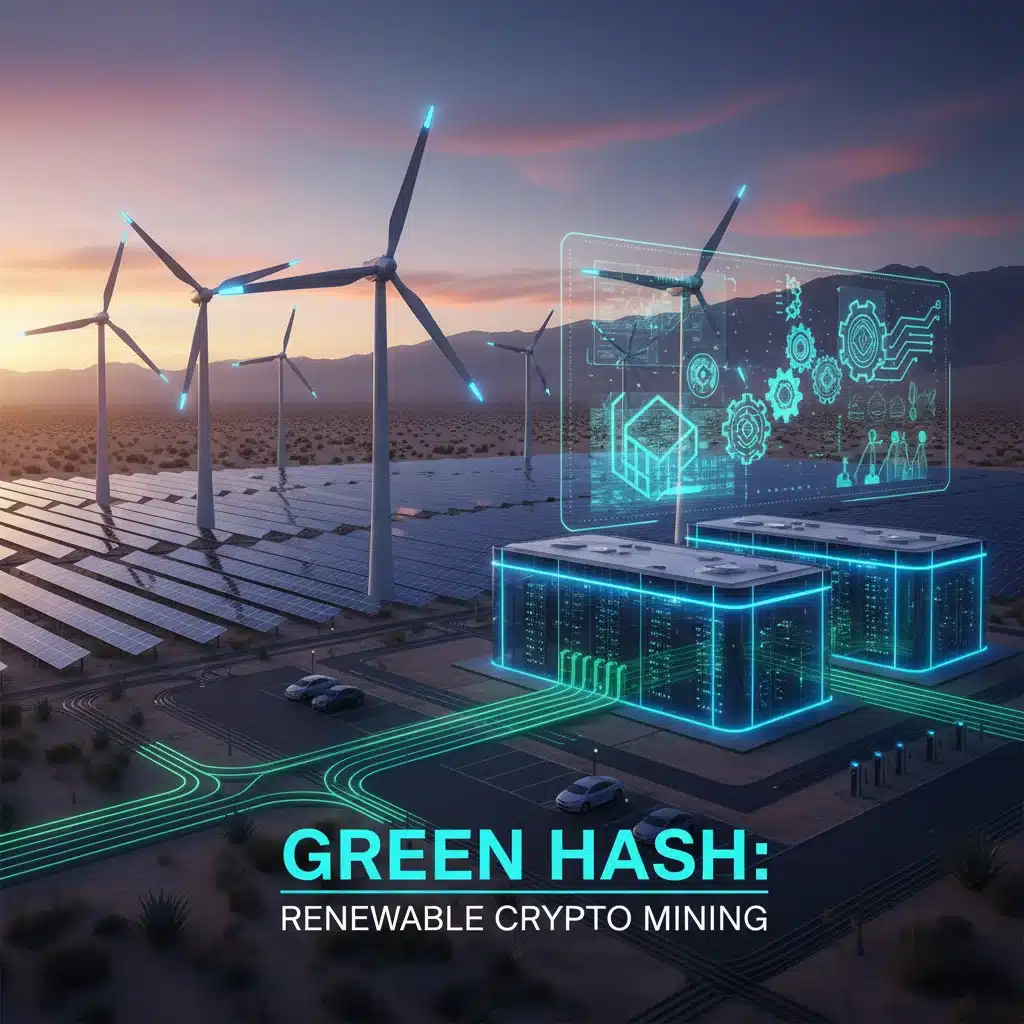
One of the most promising avenues for sustainable mining is the increased utilization of renewable energy sources. Mining operations are increasingly relocating to regions with abundant and inexpensive renewable energy, such as hydroelectric power in Scandinavia, geothermal energy in Iceland, and solar/wind farms in various parts of the world. By 2026, it’s conceivable that a significant percentage of PoW mining will be powered by renewables, not just for environmental reasons, but also for economic viability due to lower energy costs. This will involve direct partnerships with renewable energy producers and the development of grid-balancing solutions where mining operations consume surplus renewable energy that might otherwise go to waste.
Another innovative approach gaining traction is the use of waste heat from mining operations. Instead of simply dissipating heat into the atmosphere, miners are exploring ways to repurpose it for heating homes, greenhouses, or even industrial processes. This concept of “heat reuse” transforms a perceived negative externality into a valuable resource, contributing to a circular economy model for crypto mining 2026. Furthermore, advancements in hardware efficiency, particularly in ASIC design, will continue to reduce the energy required per computation, making existing PoW mining inherently more sustainable.

Regulatory Landscape: A Balancing Act
The regulatory environment surrounding cryptocurrency mining is complex and fragmented, varying significantly from country to country. By crypto mining 2026, we expect to see greater clarity and potentially more harmonized regulations globally. Governments are grappling with how to classify cryptocurrencies, manage their environmental impact, and prevent illicit activities. Some nations may implement carbon taxes or energy efficiency standards specifically for mining operations, while others might offer incentives for green mining. The European Union, for instance, has already begun discussions on the environmental impact of crypto assets, and similar conversations are taking place in the United States and Asia.
The regulatory framework for PoS will also evolve. Concerns around centralization of staking power, slashing risks, and the potential for coordinated attacks by large stakers will likely lead to new guidelines. The interplay between traditional financial regulations and the decentralized nature of crypto will be a continuous challenge. Miners and mining companies will need to be agile and adaptable, navigating a landscape that is likely to become more stringent but also potentially more predictable. Compliance will become a non-negotiable aspect of operating a successful crypto mining 2026 venture.
Geopolitical Shifts and Decentralization
The geographic distribution of crypto mining has historically been concentrated in regions with cheap electricity and favorable regulatory environments. China’s crackdown on mining in 2021 led to a significant redistribution of hash power, primarily to the United States, Kazakhstan, and other countries. By crypto mining 2026, we anticipate a more diversified and distributed global mining landscape, reducing the risk of single-point failures and enhancing the overall decentralization of PoW networks. This decentralization is not just about geographic spread but also about the diversity of mining participants, from large-scale industrial operations to smaller, independent miners leveraging renewable energy at a local level.
Geopolitical tensions and energy policies will continue to influence where mining operations are established. Countries with stable political environments, clear regulatory frameworks, and abundant, affordable renewable energy will likely become preferred destinations. Furthermore, the development of off-grid mining solutions, utilizing stranded energy assets (like flare gas from oil fields) or remote renewable energy installations, will contribute to this decentralization, bringing mining closer to the energy source and reducing transmission losses. This trend underscores the evolving nature of crypto mining 2026 as a global, adaptive industry.
The Role of Community and Open Source in Mining Innovation
The open-source ethos that underpins much of the cryptocurrency world will continue to drive innovation in mining. By crypto mining 2026, we can expect further development in open-source mining software, firmware, and even hardware designs. This collaborative approach fosters transparency, security, and accelerates the adoption of new efficiencies and sustainable practices. Independent developers and researchers will contribute to optimizing mining algorithms, improving energy efficiency, and developing tools for better monitoring and management of mining operations.
Community-driven initiatives will also play a role in advocating for responsible mining practices and educating stakeholders about the true environmental footprint of different consensus mechanisms. The collective intelligence of the crypto community will be instrumental in identifying and implementing solutions to the challenges facing crypto mining 2026, pushing for a more robust and ethical industry.
Economic Factors and Market Dynamics
The profitability of cryptocurrency mining is intricately linked to market prices, network difficulty, and electricity costs. By crypto mining 2026, these economic factors will continue to dictate the viability of mining operations. With increasing institutional adoption of cryptocurrencies and the maturation of the market, there’s a potential for greater price stability, which could make long-term mining investments more predictable. However, market volatility will always remain a characteristic of the crypto space, requiring miners to maintain flexible strategies.
The competitiveness of the mining industry will intensify. As technology advances and efficiency improves, the barrier to entry for large-scale operations might increase, while smaller, niche operations focusing on specific coins or utilizing unique energy sources could still thrive. The interplay between supply and demand for mining hardware, the cost of capital, and the availability of affordable energy will shape the economic landscape of crypto mining 2026. Furthermore, the emergence of new cryptocurrencies and blockchain projects, each with their own consensus mechanisms and economic models, will offer diversified opportunities for miners.
Security and Network Resilience
As blockchain networks become more integral to global finance and data management, their security and resilience become paramount. For PoW chains, the integrity of the network is directly tied to the collective hash power of miners. In crypto mining 2026, maintaining a high level of decentralization and a robust mining ecosystem will be crucial to preventing 51% attacks and other forms of network manipulation. This involves fostering a diverse set of miners and ensuring that no single entity or cartel gains undue control over the network’s hash rate.
For PoS networks, security concerns shift to validator centralization, slashing risks, and the potential for coordinated attacks by large stakers. Research and development will continue to focus on enhancing the security protocols of PoS, including mechanisms to detect and penalize malicious behavior, and to encourage a broad distribution of stake among numerous independent validators. The overall goal for crypto mining 2026, regardless of the consensus mechanism, is to ensure the integrity, immutability, and trustworthiness of the underlying blockchain technology.
Conclusion: A Sustainable and Evolving Future for Crypto Mining
The future of crypto mining 2026 is one of dynamic evolution, marked by significant technological advancements, an unwavering commitment to sustainability, and an increasingly sophisticated regulatory environment. While PoW mining will continue to innovate with more efficient hardware and greener energy sources, the ascendance of PoS and other energy-efficient consensus mechanisms will fundamentally alter the industry’s energy footprint. The emphasis will shift from brute computational power to smart, sustainable, and compliant operations.
Miners who embrace renewable energy, explore heat reuse opportunities, and adapt to evolving regulatory landscapes will be best positioned for success. The industry as a whole will likely become more decentralized, resilient, and integrated with global energy markets. As we move towards 2026, the narrative around cryptocurrency mining will increasingly focus on its potential as a catalyst for renewable energy development and a contributor to a more efficient, decentralized digital future, rather than solely on its environmental impact. The journey towards a truly sustainable and robust crypto mining 2026 is well underway, promising exciting opportunities and challenges for all involved.
Author