Web3 Education Pathways: Navigating the Future of the Internet by 2026
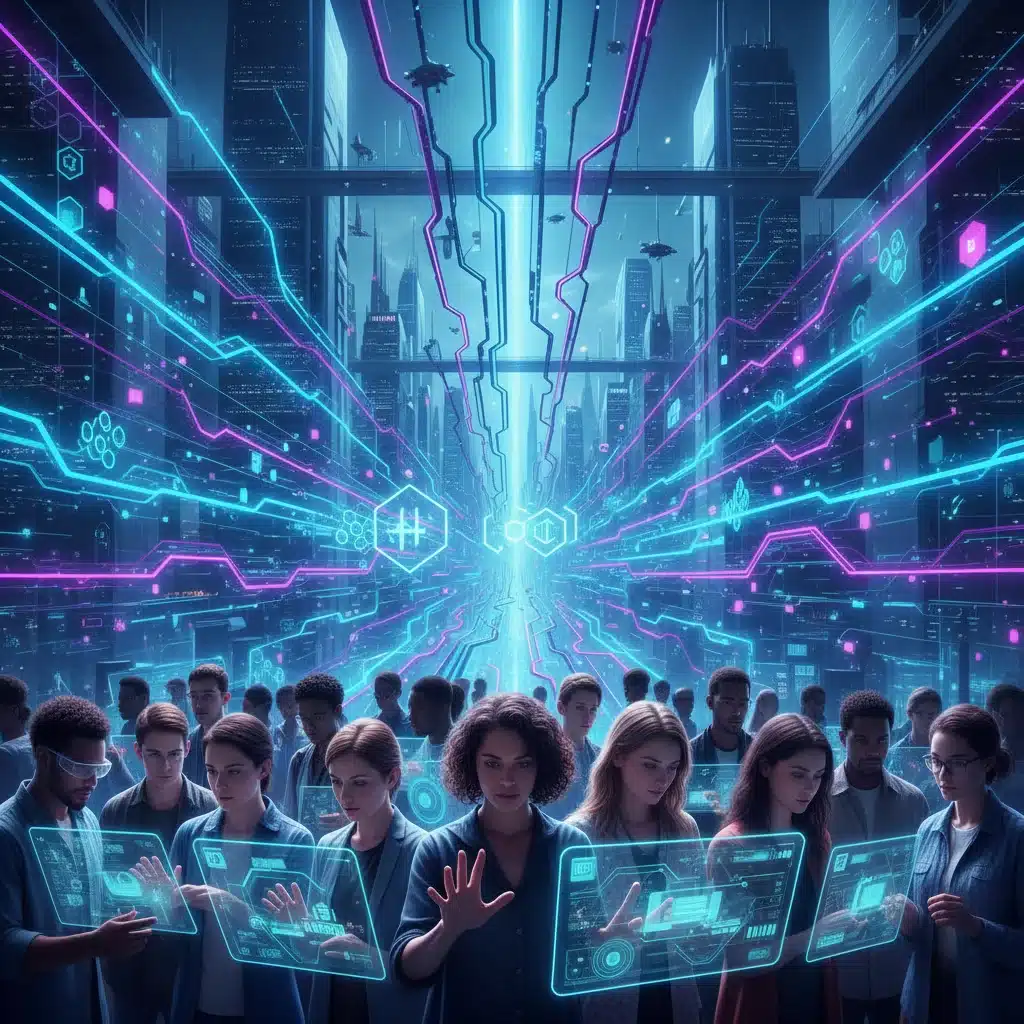
The internet is undergoing a profound transformation, moving from a centralized model to a decentralized one. This shift, often referred to as Web3, promises a more open, secure, and user-centric digital experience. By 2026, understanding and engaging with Web3 will no longer be a niche skill but a fundamental requirement for many industries and individuals. This comprehensive guide explores the essential Web3 Education Pathways that will equip you with the knowledge and skills to navigate and thrive in this evolving landscape.
Web3 is built on foundational technologies like blockchain, smart contracts, and decentralized autonomous organizations (DAOs). It encompasses a wide array of applications, from decentralized finance (DeFi) and non-fungible tokens (NFTs) to the immersive metaverse and decentralized social media. The sheer breadth and rapid evolution of Web3 can be daunting, but with the right educational approach, anyone can grasp its core principles and contribute to its development.
Our journey into Web3 Education Pathways will delve into the core components of this new internet, identify key learning resources, and outline a strategic approach to acquiring the necessary expertise. Whether you’re a developer, an artist, an entrepreneur, or simply a curious individual, there’s a pathway for you to become a part of the Web3 revolution.
Understanding the Foundations of Web3: The Bedrock of Decentralization
Before diving into specific applications, a solid understanding of Web3’s underlying technologies is crucial. This forms the initial and most vital part of any effective Web3 Education Pathways. At its heart, Web3 is powered by blockchain technology.
Blockchain Technology: The Distributed Ledger
Blockchain is a distributed, immutable ledger that records transactions across a network of computers. Unlike traditional databases, there’s no central authority; instead, participants collectively maintain and validate the ledger. Key concepts to master include:
- Cryptographic Principles: Hashing, public-key cryptography, and digital signatures are fundamental to securing blockchain transactions.
- Consensus Mechanisms: Proof of Work (PoW), Proof of Stake (PoS), and other algorithms that ensure agreement among network participants on the state of the blockchain.
- Decentralization: The distribution of power and control away from a central entity, a core tenet of Web3.
- Immutability: The inability to alter or delete past transactions, ensuring data integrity and transparency.
Learning resources for blockchain fundamentals include online courses from platforms like Coursera, edX, and dedicated blockchain academies. Books such as ‘Mastering Bitcoin’ by Andreas Antonopoulos and ‘Blockchain Basics’ by Daniel Drescher offer excellent in-depth knowledge. Engaging with blockchain communities on platforms like Reddit and Discord can also provide valuable insights and peer support.
Smart Contracts: Automating Agreements
Smart contracts are self-executing contracts with the terms of the agreement directly written into lines of code. They run on a blockchain and automatically execute when predefined conditions are met, eliminating the need for intermediaries. Understanding smart contracts is a cornerstone of any comprehensive Web3 Education Pathways.
- Solidity: The most popular programming language for writing smart contracts on the Ethereum blockchain.
- EVM (Ethereum Virtual Machine): The runtime environment for smart contracts on Ethereum.
- Auditing Smart Contracts: The process of reviewing smart contract code for vulnerabilities and bugs, a critical skill for security.
For smart contract development, interactive coding platforms like CryptoZombies and Ethernaut offer hands-on learning. Official Ethereum documentation and tutorials are indispensable. For those interested in security, understanding common smart contract vulnerabilities (e.g., reentrancy attacks, integer overflow) is paramount.
Decentralized Autonomous Organizations (DAOs): Governance in Web3
DAOs are organizations represented by rules encoded as a transparent computer program, controlled by the organization’s members, and not influenced by a central government. They are a revolutionary way to coordinate human effort and resources in a decentralized manner.
- Governance Models: Understanding different voting mechanisms and proposal processes within DAOs.
- Tokenomics: The study of how cryptocurrencies are designed to incentivize participation and govern a decentralized network.
- Legal and Regulatory Implications: The evolving legal landscape surrounding DAOs and their operations.
Exploring existing DAOs like MakerDAO, Uniswap, and Aave can provide practical insights. Whitepapers and community forums of these DAOs are excellent learning materials. Podcasts and YouTube channels dedicated to Web3 often feature discussions on DAO governance and future trends, further enriching your Web3 Education Pathways.
Diving Deeper: Key Pillars of Web3 Applications
Once the foundational knowledge is established, the next step in Web3 Education Pathways involves exploring the major application areas that are driving the growth and adoption of the decentralized internet. These include DeFi, NFTs, and the Metaverse.
Decentralized Finance (DeFi): Reshaping Financial Services
DeFi refers to an ecosystem of financial applications built on blockchain technology, primarily Ethereum. It aims to recreate traditional financial services (lending, borrowing, trading) in a decentralized, transparent, and permissionless manner.
- Lending and Borrowing Protocols: Understanding how platforms like Aave and Compound facilitate peer-to-peer lending without intermediaries.
- Decentralized Exchanges (DEXs): Learning about Uniswap, SushiSwap, and other platforms that enable direct token swaps.
- Stablecoins: Grasping the concept of cryptocurrencies pegged to stable assets like the US dollar.
- Yield Farming and Staking: Exploring strategies for earning passive income in the DeFi ecosystem.
To master DeFi, hands-on experience is invaluable. Start with small amounts of crypto on testnets or with minimal capital on mainnets. Follow reputable DeFi analysts and educators. Websites like DeFi Pulse and CoinMarketCap provide real-time data and insights into the DeFi market. Understanding the risks associated with DeFi, such as impermanent loss and smart contract vulnerabilities, is also critical for a well-rounded Web3 Education Pathways.
Non-Fungible Tokens (NFTs): Digital Ownership and Creativity
NFTs are unique digital assets stored on a blockchain that represent ownership of a specific item or piece of content, whether digital art, music, collectibles, or even real-world assets. They have revolutionized digital ownership and empowered creators.
- NFT Standards: ERC-721 and ERC-1155 on Ethereum, and equivalent standards on other blockchains.
- Minting and Trading NFTs: Understanding the process of creating and exchanging NFTs on platforms like OpenSea, Rarible, and SuperRare.
- Intellectual Property and Royalties: The implications of NFTs for creators regarding ownership, licensing, and earning royalties.
- Use Cases Beyond Art: Exploring NFTs in gaming, ticketing, identity, and supply chain management.
Engaging with NFT communities, following prominent artists and collectors, and experimenting with creating your own NFTs (even for learning purposes) can significantly enhance your understanding. Resources like NFT Evening and Decrypt provide up-to-date news and analysis on the NFT space. This segment of Web3 Education Pathways is particularly appealing to creatives and marketers.
The Metaverse: Immersive Digital Worlds
The metaverse refers to a persistent, interconnected, and immersive virtual world where users can interact with each other, digital objects, and AI-powered entities. Web3 principles are crucial for building a truly open and decentralized metaverse.
- Virtual Reality (VR) and Augmented Reality (AR): Understanding the hardware and software enabling immersive experiences.
- Digital Identity and Avatars: How users represent themselves and interact within virtual environments.
- Virtual Economies: The role of cryptocurrencies and NFTs in powering economic activity within metaverses like Decentraland and The Sandbox.
- Interoperability: The challenge and vision of seamless asset and identity transfer between different metaverse platforms.
Exploring existing metaverse platforms, participating in virtual events, and following thought leaders in the space are excellent ways to gain practical knowledge. Understanding game development principles (Unity, Unreal Engine) combined with blockchain integration is a powerful combination for those looking to build in the metaverse. This aspect of Web3 Education Pathways is rapidly evolving and offers immense potential.
Advanced Web3 Education Pathways: Specializations and Future Trends
For those looking to specialize or push the boundaries of Web3, several advanced pathways offer deeper dives into specific technical and conceptual areas.
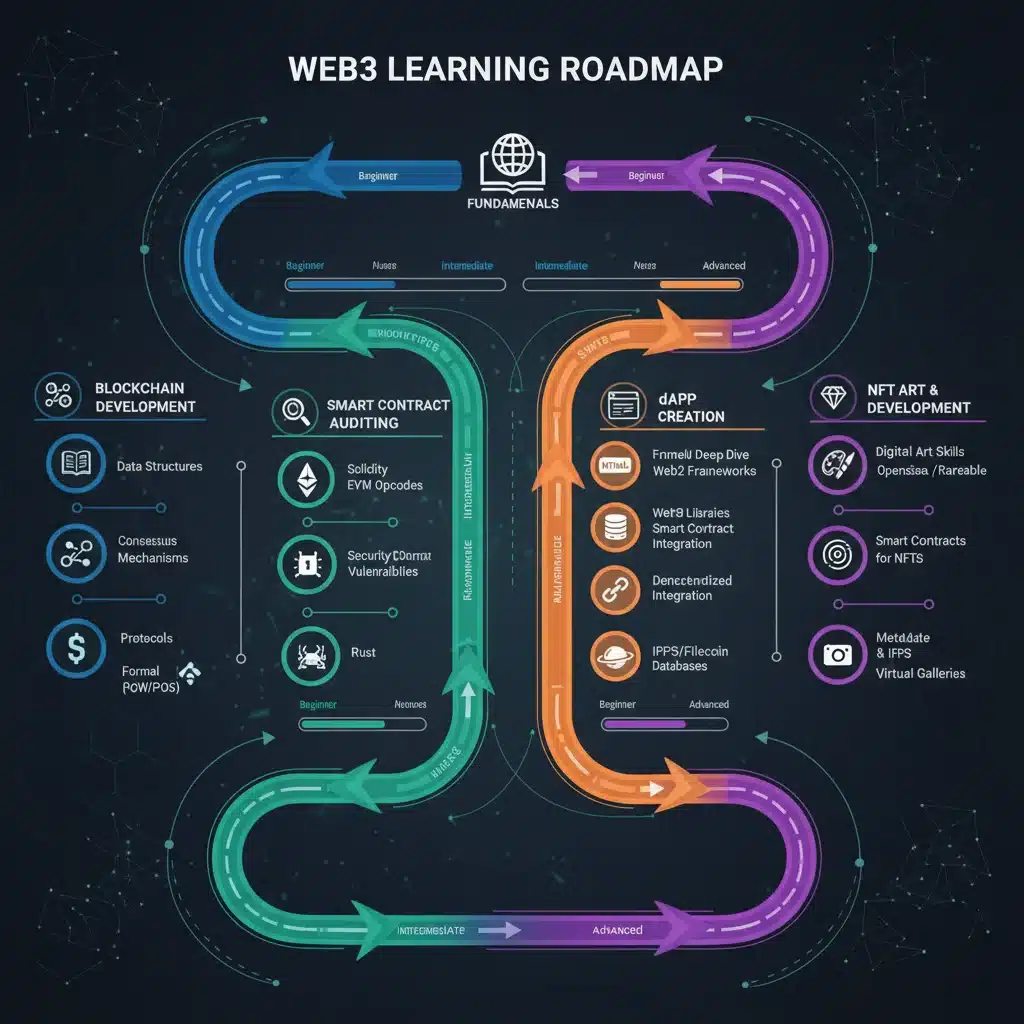
Web3 Development and Engineering
This pathway focuses on the technical skills required to build and maintain Web3 applications and infrastructure.
- Blockchain Development: Mastering languages like Solidity, Rust (for Solana, Polkadot), and Go (for various blockchain implementations).
- dApp Development: Front-end frameworks (React, Vue), Web3.js/Ethers.js libraries for interacting with blockchains, and IPFS for decentralized storage.
- Smart Contract Security: Advanced auditing techniques, formal verification, and secure coding practices.
- Layer 2 Solutions: Understanding scaling solutions like rollups (Optimistic, ZK-Rollups) and sidechains.
- Cross-Chain Interoperability: Exploring bridges and protocols that enable communication between different blockchains.
Bootcamps, specialized online courses, and contributing to open-source Web3 projects are excellent ways to gain hands-on experience. Platforms like Gitcoin offer opportunities to work on real-world bounties and collaborate with experienced developers. This is arguably the most in-demand and impactful of the Web3 Education Pathways for technical individuals.
Web3 Security and Audit
With significant value locked in smart contracts and decentralized protocols, security is paramount. This pathway focuses on identifying and mitigating vulnerabilities.
- Cryptocurrency Security: Understanding common attack vectors against exchanges, wallets, and protocols.
- Smart Contract Auditing Tools: Familiarity with tools like Slither, Mythril, and Fuzzing techniques.
- Economic Security of Protocols: Analyzing potential exploits related to tokenomics, governance, and flash loans.
- Incident Response: Developing strategies for responding to and recovering from security breaches in decentralized systems.
Certifications from reputable blockchain security firms, participation in bug bounty programs, and studying past exploits (e.g., The DAO hack, Parity wallet hack) are crucial. This niche within Web3 Education Pathways is highly specialized and critical for the ecosystem’s integrity.
Web3 Product Management and Design
Building user-friendly and impactful Web3 products requires a unique blend of product management and UX/UI design skills.
- User Experience (UX) in Web3: Designing intuitive interfaces for complex decentralized applications.
- Token Gating and Community Building: Leveraging tokens to create exclusive communities and incentivize participation.
- Product Strategy for Decentralization: Understanding how to align product goals with Web3 principles of transparency and user ownership.
- Legal and Compliance Considerations: Navigating the regulatory landscape for Web3 products and services.
Courses on product management combined with specific Web3 design thinking workshops are beneficial. Studying successful Web3 projects and analyzing their user flows provides practical insights. This pathway highlights that Web3 Education Pathways are not just for developers but for anyone involved in product creation.
Strategic Approaches to Web3 Education Pathways by 2026
Given the rapid pace of change in Web3, a strategic and adaptive approach to learning is essential. Here’s how to structure your educational journey effectively:
1. Start with the Basics, Build Gradually
Resist the urge to jump directly into the most complex topics. Begin with blockchain fundamentals, then move to smart contracts, and progressively explore DeFi, NFTs, and the metaverse. A strong foundation makes advanced concepts much easier to grasp. This iterative learning process is key to successful Web3 Education Pathways.
2. Embrace Hands-on Learning
Reading and watching videos are helpful, but practical application solidifies understanding. Set up a local development environment, deploy a simple smart contract, mint an NFT on a testnet, or engage with a DeFi protocol with a small amount of capital. ‘Learning by doing’ is especially effective in Web3.
3. Join Web3 Communities
The Web3 space is highly community-driven. Join Discord servers, Telegram groups, and online forums dedicated to specific projects or broader Web3 discussions. Ask questions, share your progress, and learn from others. Networking within these communities can also open doors to collaboration and career opportunities. Active participation in these communities is a powerful accelerant for any Web3 Education Pathways.
4. Stay Updated with News and Trends
Web3 is constantly evolving. Follow reputable news sources (e.g., CoinDesk, The Block, Decrypt), subscribe to newsletters, and listen to podcasts. Understanding emerging technologies, regulatory changes, and market trends is crucial for staying relevant. This continuous learning is a non-negotiable part of effective Web3 Education Pathways.
5. Consider Formal and Informal Education
While self-study is powerful, formal courses and bootcamps can provide structured learning and credentials. Universities are increasingly offering blockchain and Web3 programs. Simultaneously, informal learning through open-source contributions, hackathons, and personal projects offers invaluable experience.
6. Focus on Interdisciplinary Skills
Web3 is not just about technology. It intersects with economics, law, sociology, art, and philosophy. Developing an interdisciplinary perspective will give you a more holistic understanding and enable you to contribute in diverse ways. For instance, understanding game theory is as important as understanding cryptography for some Web3 Education Pathways.
7. Understand the Risks and Challenges
Web3, while promising, also comes with risks, including volatility, security vulnerabilities, regulatory uncertainty, and scams. A balanced understanding of both the opportunities and the challenges is crucial for responsible engagement and development within the ecosystem. Critical thinking about these aspects is integral to mature Web3 Education Pathways.
The Future of Work and Innovation with Web3 Education Pathways
By 2026, the impact of Web3 will be felt across numerous industries. Early adopters and those who invest in their Web3 Education Pathways will be well-positioned to capitalize on new opportunities.
- Software Development: Demand for blockchain developers, smart contract auditors, and dApp engineers will skyrocket.
- Finance: Traditional financial institutions will integrate DeFi elements, creating roles for analysts, product managers, and compliance officers with Web3 expertise.
- Art and Entertainment: NFT artists, metaverse architects, and digital content creators will find new avenues for monetization and engagement.
- Gaming: Play-to-earn models and blockchain-integrated games will require developers, economists, and community managers.
- Marketing and Branding: Understanding how to engage with decentralized communities and leverage NFTs for brand loyalty will be a critical skill.
- Legal and Policy: Experts in blockchain law, intellectual property for digital assets, and regulatory compliance will be in high demand.
The decentralized nature of Web3 also fosters a global, permissionless talent pool, allowing individuals from anywhere to contribute and earn. This offers unprecedented opportunities for remote work and entrepreneurial ventures.
Conclusion: Charting Your Course in Web3 by 2026
The journey into Web3 is an exciting and transformative one. The landscape is complex and constantly evolving, but with a structured approach to learning, anyone can become a proficient participant and innovator. By focusing on fundamental blockchain concepts, exploring key application areas like DeFi, NFTs, and the metaverse, and adopting a continuous learning mindset, you can effectively navigate the various Web3 Education Pathways available.
Whether your goal is to become a blockchain developer, a DeFi analyst, a metaverse designer, or simply a well-informed user, the time to start your Web3 education is now. By 2026, those who have invested in understanding this next generation of the internet will undoubtedly be at the forefront of innovation, shaping the digital world for decades to come. Embrace the challenge, engage with the community, and build your future in Web3.
The decentralized future awaits, and your informed participation is key to its success. Start exploring your Web3 Education Pathways today!
Author