Metaverse Crypto Education: Future Insights 2026
The digital landscape is undergoing a profound transformation, driven by the rapid evolution of technologies such as the metaverse and cryptocurrencies. As we look towards 2026, the convergence of these groundbreaking innovations promises to reshape not just our daily lives, but fundamentally alter the way we approach education. This article delves into the exciting and complex world of Metaverse Crypto Education, exploring its potential, challenges, and the educational perspectives on their intersecting futures.
The concept of the metaverse, a persistent, interconnected set of virtual spaces where users can interact with each other, digital objects, and AI, is no longer confined to science fiction. Similarly, cryptocurrencies and blockchain technology have moved beyond niche financial instruments to become foundational elements of a new digital economy. When these two forces combine, particularly within the realm of learning, they create a paradigm shift with immense implications for educators, learners, and institutions worldwide.
Our journey into Metaverse Crypto Education will uncover how virtual environments can host immersive learning experiences, how digital assets can revolutionize accreditation and funding, and what skills will be paramount in this evolving educational frontier. We will examine the technological underpinnings, the pedagogical shifts required, and the socio-economic impacts of this powerful convergence.
The Genesis of Metaverse Crypto Education: A Brief Overview
Before we project into 2026, it’s crucial to understand the individual trajectories that led to the concept of Metaverse Crypto Education. The metaverse, often envisioned as the next iteration of the internet, or Web3, aims to create a more immersive and decentralized online experience. Early iterations, such as gaming platforms like Roblox and Decentraland, have already demonstrated the power of user-generated content and virtual economies.
Cryptocurrencies, on the other hand, powered by blockchain technology, introduced decentralization, transparency, and immutability to digital transactions. Beyond mere digital cash, blockchain has enabled smart contracts, NFTs (Non-Fungible Tokens), and DAOs (Decentralized Autonomous Organizations), each with significant potential to disrupt traditional industries, including education.
The intersection began subtly, with NFTs being used for digital art and collectibles within virtual worlds. Soon, the potential for using NFTs to represent ownership of virtual land, unique in-game items, or even digital identities became apparent. For education, this opened up possibilities for verifiable digital credentials, ownership of learning assets, and new funding models.
By 2026, the foundational infrastructure for Metaverse Crypto Education is expected to be significantly more robust, with improved interoperability between virtual worlds, more user-friendly interfaces for blockchain interactions, and a growing understanding of the economic and social implications of these technologies.
Immersive Learning Environments in the Metaverse
One of the most compelling aspects of Metaverse Crypto Education is the promise of truly immersive learning environments. Traditional online learning, while convenient, often lacks the engagement and collaborative depth of in-person instruction. The metaverse seeks to bridge this gap by offering virtual spaces that can simulate real-world scenarios, historical events, scientific labs, or even abstract concepts in highly interactive ways.
Virtual Campuses and Classrooms
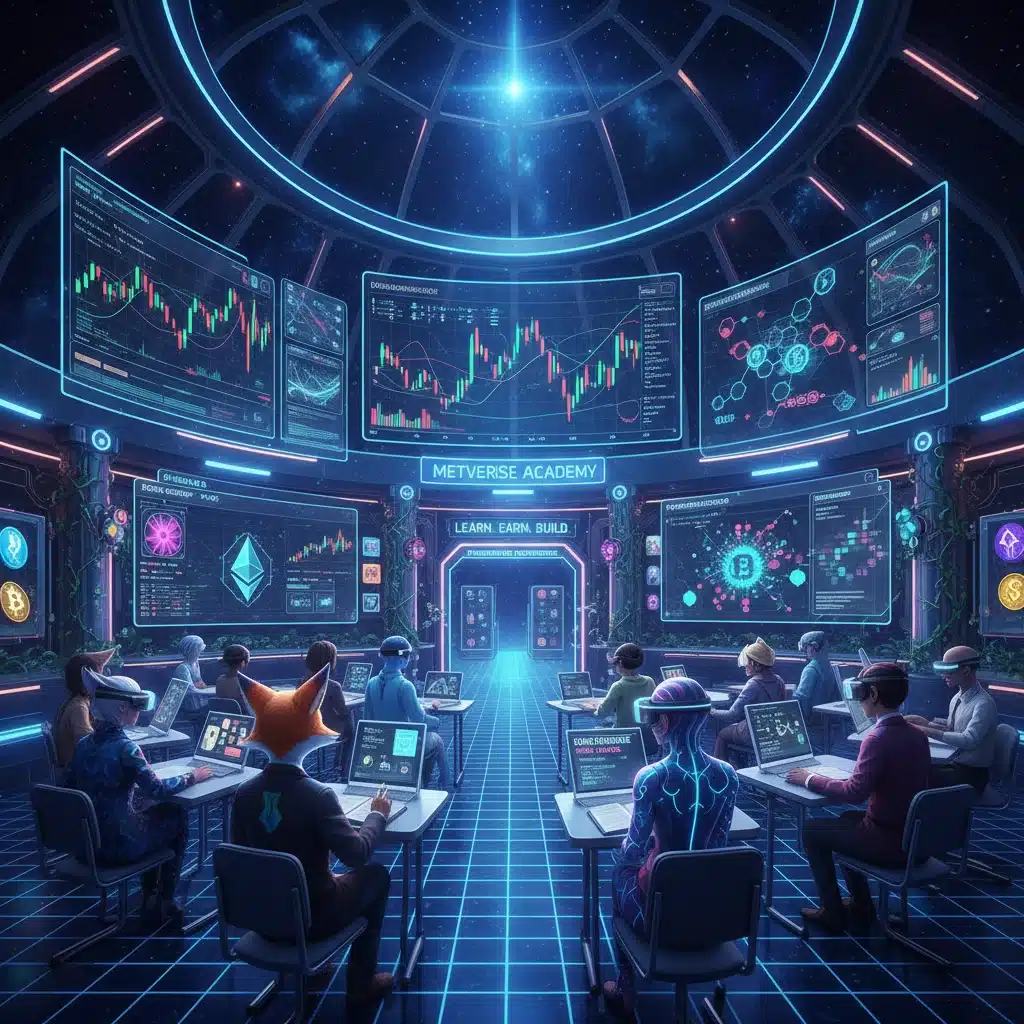
Imagine attending a lecture in a grand virtual auditorium, where you can interact with 3D models of complex machinery, participate in group discussions with avatars from around the globe, and even conduct virtual experiments that would be impossible or too costly in physical settings. Universities and educational institutions are already experimenting with creating virtual campuses, allowing students to experience campus life, attend classes, and socialize without geographical constraints. By 2026, these virtual campuses will likely be more sophisticated, offering personalized learning paths and adaptive content powered by AI, all within a secure, blockchain-verified ecosystem.
Experiential Learning and Simulations
The metaverse excels at providing experiential learning opportunities. Medical students could perform virtual surgeries on anatomically accurate 3D models, engineering students could design and test prototypes in a physics-accurate virtual environment, and history students could walk through ancient Rome, interacting with historical figures and artifacts. These simulations, enhanced by haptic feedback and advanced graphics, offer a level of engagement and practical application unattainable through textbooks or 2D videos.
Collaborative Learning and Global Communities
Metaverse Crypto Education fosters unprecedented collaboration. Students from different continents can work together on projects in shared virtual spaces, leveraging diverse perspectives and skill sets. This global connectivity not only enriches the learning experience but also prepares students for an increasingly interconnected world. Communication tools within the metaverse will evolve, offering real-time translation, gesture recognition, and emotional cues to enhance understanding and empathy across cultures.
Cryptocurrency and Blockchain’s Role in Educational Transformation
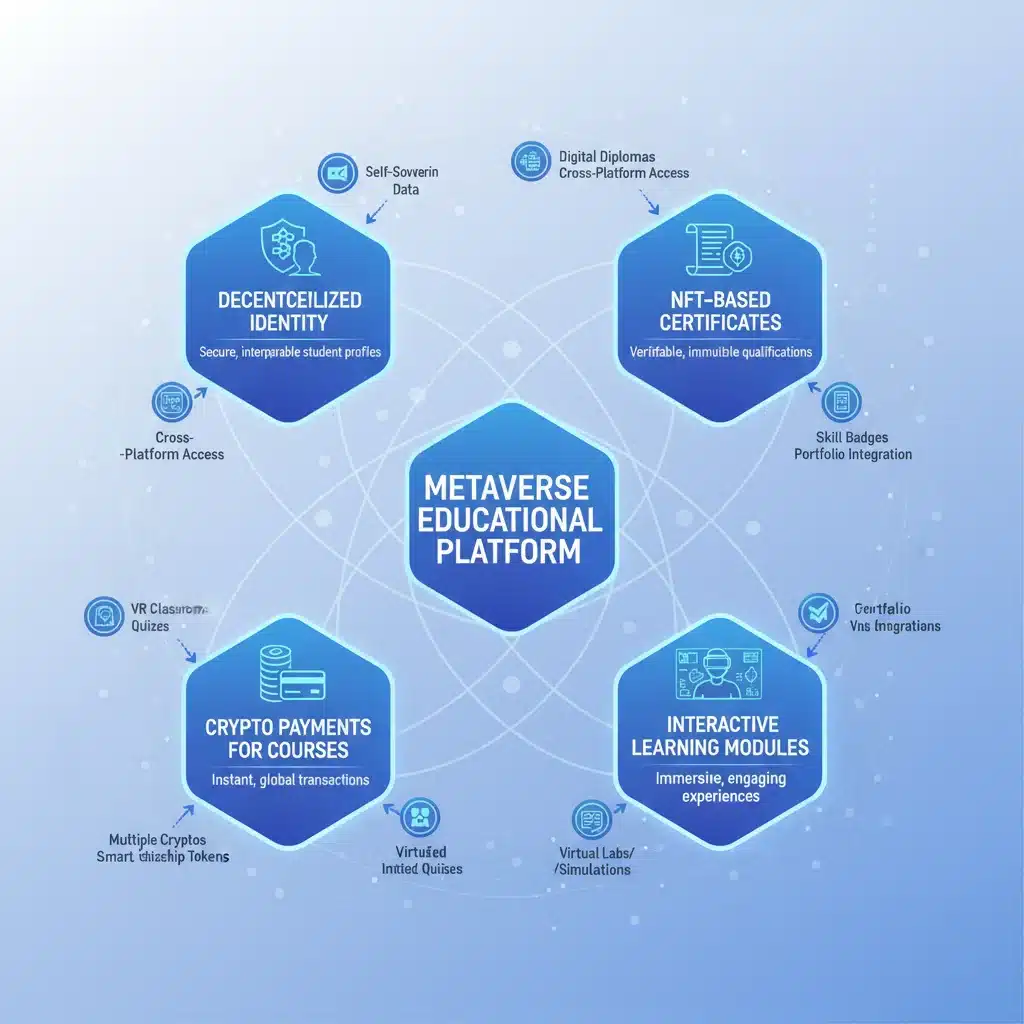
While the metaverse provides the immersive environment, cryptocurrencies and blockchain technology offer the foundational infrastructure for trust, ownership, and value exchange within Metaverse Crypto Education. Their impact extends across several critical areas:
Decentralized Identity and Verifiable Credentials
One of the most significant contributions of blockchain to education is the ability to create secure, verifiable, and immutable digital credentials. NFTs can represent degrees, certifications, and even individual course completions. This eliminates the need for centralized verification, making credentials more resistant to fraud and easily shareable across platforms. Learners will have sovereign ownership over their educational achievements, building a comprehensive and universally recognized digital portfolio.
New Funding Models and Incentives
Cryptocurrencies introduce innovative ways to fund education. Scholarship programs could be managed through smart contracts, ensuring transparency and automated disbursement based on predefined criteria. Learn-to-earn models, where students are rewarded with tokens for completing modules or achieving learning milestones, could incentivize engagement and democratize access to education. Furthermore, DAOs could emerge as new forms of educational institutions, governed by their community members and funded by token holders, offering a truly decentralized approach to learning and curriculum development.
Ownership of Digital Assets and Content Creation
In Metaverse Crypto Education, students and educators can become creators and owners of digital assets. Educational content, interactive simulations, and even virtual learning spaces can be tokenized as NFTs, allowing creators to monetize their work directly. This empowers educators to develop and distribute specialized curricula, while students can create and own their projects, fostering a sense of pride and providing tangible evidence of their skills.
Challenges and Considerations for 2026
Despite its immense potential, the path to widespread Metaverse Crypto Education is not without its hurdles. Several challenges need to be addressed to ensure equitable access and effective implementation.
Accessibility and Digital Divide
Access to high-speed internet, powerful computing devices, and VR/AR headsets remains a barrier for many. Bridging the digital divide will be crucial to prevent Metaverse Crypto Education from exacerbating existing inequalities. Initiatives to provide affordable hardware and internet access, alongside developing accessible metaverse platforms, will be vital.
Technological Infrastructure and Interoperability
For the metaverse to truly flourish as an educational platform, robust and interoperable infrastructure is necessary. Different metaverse platforms need to be able to communicate and share assets seamlessly. Standardization efforts and open protocols will be key to creating a cohesive and expansive educational metaverse.
Security, Privacy, and Regulation
The decentralized nature of blockchain and the immersive nature of the metaverse raise significant concerns regarding data security, user privacy, and ethical guidelines. Protecting student data, preventing digital harassment, and establishing clear regulatory frameworks for digital assets and virtual interactions will be paramount. Educational institutions will need to develop comprehensive policies to navigate these complex issues.
Pedagogical Shifts and Educator Training
The transition to Metaverse Crypto Education requires a fundamental shift in pedagogical approaches. Educators will need training not only in using metaverse tools but also in designing engaging, interactive, and effective learning experiences within these new environments. The role of the educator may evolve from a traditional lecturer to a facilitator, guide, and curator of virtual learning journeys.
The Curriculum of the Future: Skills for the Metaverse and Crypto Economy
As Metaverse Crypto Education takes root, the skills deemed essential for future success will also evolve. Traditional academic knowledge will remain important, but new competencies will rise to prominence.
Digital Literacy and Web3 Understanding
A deep understanding of digital literacy, encompassing not just basic computer skills but also proficiency in navigating virtual environments, understanding blockchain fundamentals, and interacting with decentralized applications (dApps), will be crucial. Students will need to comprehend concepts like digital ownership, cryptographic security, and the mechanics of decentralized finance (DeFi).
Critical Thinking and Problem-Solving in Virtual Worlds
The dynamic and often unpredictable nature of the metaverse will demand strong critical thinking and problem-solving skills. Learners will need to analyze complex virtual scenarios, adapt to new digital tools, and creatively solve problems that emerge in these evolving digital spaces.
Collaboration, Communication, and Digital Citizenship
Effective collaboration and communication within diverse global virtual communities will be paramount. Students will learn to work effectively with avatars from different backgrounds, negotiate digital ethics, and practice responsible digital citizenship. Understanding and respecting virtual property rights, digital identities, and community guidelines will be essential.
Creator Economy Skills
The metaverse is a creator’s paradise. Skills in 3D modeling, game design, virtual world development, content creation (e.g., virtual art, music, narratives), and even smart contract programming will become highly valuable. Metaverse Crypto Education will empower students to become active participants and contributors to the digital economy, rather than just consumers.
Case Studies and Emerging Trends in 2026
By 2026, we anticipate several compelling case studies and emerging trends in Metaverse Crypto Education:
Decentralized Autonomous Organizations (DAOs) for Learning
Expect to see more DAOs forming around specific educational goals. These DAOs could fund research, develop open-source curricula, or even operate entire virtual schools. Members, holding governance tokens, would vote on key decisions, ensuring a community-driven approach to education.
NFTs as Academic Transcripts and Portfolios
The use of NFTs for academic records will become more commonplace. Imagine a student’s entire academic journey, from kindergarten to postgraduate studies, represented as a series of interconnected NFTs, forming an unforgeable and portable digital portfolio accessible globally. This could revolutionize hiring processes and inter-institutional transfers.
Play-to-Learn and Learn-to-Earn Models
Gaming elements will be deeply integrated into learning. Students might earn cryptocurrency or NFTs for mastering concepts, completing quests, or contributing to educational projects. This gamified approach, often referred to as ‘play-to-learn’ or ‘learn-to-earn’, will significantly boost engagement and provide tangible rewards for academic effort.
Virtual Research Labs and Global Collaboration
Scientists and researchers will increasingly utilize the metaverse for collaborative research. Virtual labs will allow for complex simulations, data visualization, and real-time collaboration on experiments, transcending geographical boundaries. Funding for such research could be managed through crypto grants and decentralized science (DeSci) initiatives.
Corporate Training and Professional Development in the Metaverse
Beyond traditional academia, corporations will heavily invest in metaverse-based training programs. Employees can undergo realistic simulations for complex tasks, collaborate on projects in virtual offices, and receive NFT-based certifications for completed training modules. This offers a more engaging and effective alternative to traditional e-learning platforms.
The Role of AI in Metaverse Crypto Education
Artificial intelligence will play a pivotal role in enhancing Metaverse Crypto Education. AI-powered tutors and mentors can provide personalized learning experiences, adapting content and pace to individual student needs. AI can analyze student performance within virtual environments, identifying areas where support is needed and suggesting tailored resources.
Furthermore, AI can assist in generating dynamic and responsive virtual environments, creating realistic non-player characters (NPCs) for interactive simulations, and even moderating discussions to ensure a safe and productive learning space. The combination of AI, metaverse, and crypto creates a powerful trifecta for the future of learning.
Ethical Considerations and Future Outlook
As we embrace the future of Metaverse Crypto Education, it is crucial to maintain a strong focus on ethical considerations. Ensuring inclusivity, protecting vulnerable populations, and preventing the misuse of these powerful technologies are paramount. Dialogue between technologists, educators, policymakers, and ethicists will be essential to shape a responsible and beneficial future.
By 2026, we anticipate a more mature and integrated ecosystem where the metaverse and cryptocurrency are not just tools but integral components of a new educational paradigm. The potential for truly democratized, engaging, and globally connected learning is immense. The journey will be complex, but the rewards of a more accessible and effective education system are well worth the effort.
Conclusion: Preparing for the Educational Revolution
The intersection of the metaverse and cryptocurrency is poised to ignite an educational revolution. Metaverse Crypto Education represents a future where learning is not confined by physical boundaries or traditional structures, but is instead immersive, interactive, verifiable, and empowering. From virtual campuses and experiential simulations to NFT-based credentials and decentralized funding, the possibilities are vast.
While challenges related to accessibility, infrastructure, and ethical governance remain, the proactive engagement of educators, developers, and policymakers can pave the way for a transformative learning experience. By embracing these technologies and understanding their profound implications, we can prepare the next generation for a world where digital fluency, critical thinking, and collaborative innovation are not just desirable skills, but essential competencies for navigating the increasingly interconnected and decentralized future.
The year 2026 will mark a significant milestone in this journey, with early adopters demonstrating the true power of this convergence. It is an exciting time to be involved in education, as we stand at the precipice of a new era of learning, shaped by the boundless potential of the metaverse and the transformative power of crypto.
Author